
Power Ledger, Japan’s Kepco extend blockchain energy collaboration
Japanese utility Kansai Electric Power has extended a demonstration project with Australian P2P energy pioneer Power Ledger to track renewable energy certificates and trade PV-generated electricity.

100% renewables means 95% less water consumption for conventional power generation
According to a new study by Finland’s LUT University, solar PV consumes between 2% and 15% of the water that coal and nuclear power plants use to produce just 1 MWh of output; for wind, this percentage ranges from 0.1% to 14%. Under the researchers’ best policy scenario, water consumption could be reduced by 75.1% by 2030, compared to 2015 levels.
Investors learn about Tasmania’s green hydrogen potential
The Australian state of Tasmania has approached international investors to present its unique potential for the production of hydrogen from renewable sources, as it aims to position itself at the forefront of the nation’s green hydrogen push.
US senators call for Huawei ban in letter to energy regulator
Eleven U.S. Senators have signed a letter to the Federal Energy Regulatory Commission about the threat that Huawei’s equipment poses to the nation’s energy infrastructure.
ReNew Power, South Korea’s GS E&C to build 300 MW of PV in India
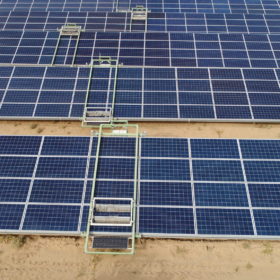
The Indian developer will hold a 51% stake in the venture, with Seoul-based GS E&C taking the remainder. The capacity was awarded under Solar Energy Corp. of India’s tranche-IV auction earlier this year.
ARENA announces major research funding into end-of-life solar PV issues
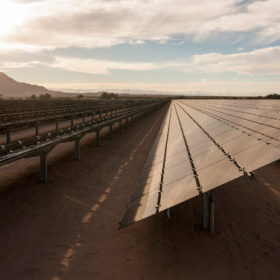
The Australian Renewable Energy Agency has announced AUD 15 million ($10.3 million) in research funding to investigate end-of-life issues for PV modules. Ultimately it is hoped that the research will increase solar PV efficiency while lowering costs.

US research lab rewires solar cell efficiency to 27.3%, sees path to greater than 32%
NREL has published a paper showing an experimental solar cell, with a unique technique for wiring two separate solar cells into one, that increased the cell’s efficiency by 4%. The document also offers a respectable review of other technologies being developed.

Winners do not always win
As part of a series of interviews on renewable energy and geopolitics, Indra Overland – head of the Center for Energy Research at the Norwegian Institute for International Affairs – explains why some countries will take the lead in the energy transition. All of the countries in Africa, with the exception of a few oil exporters, will be part of the solar revolution, he said, noting the recent release of the GeGaLo Index. He also looks at why big economies such as the United States, Germany, China and Australia are not geopolitically well-situated for the energy transition, and why others, such as Japan, France and Spain, are positioned more favorably. In addition, Overland discusses why it is particularly important that nations under strong political pressure grasp the benefits of clean energy.
Date set for Panda Green state bail-out vote
The Hong Kong-listed, Chinese state-owned solar developer is in a race against time to settle a US$350 million bond which is due to mature on January 25. The bail-out, which will be put to the vote on December 30, will leave the company a further US$125 million shy.
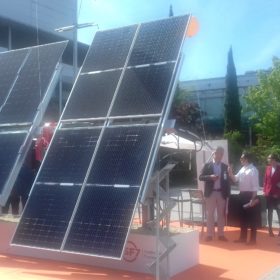
Europe on track for decade-topping 16.7 GW of new solar this year
Trade body SolarPower Europe’s preliminary statistics suggest this could be the continent’s best year for PV since 2010, with capacity additions set to soar 104% year on year. Spain is leading the way with an expected 4.7 GW of new solar, followed by Germany, with 4 GW.
