
Mounting interest in gravity-based storage solutions
Austrian researchers have proposed gravitational energy storage for locations with low demand. The scientists claim the system they are suggesting can be combined with other forms of storage as well as renewables, costs $50-100 per megawatt-hour of stored energy and $1-2 million per megawatt of installed capacity to develop.

Exeger and ABB to build ‘light harvesting material’ fab in Sweden
Swedish company Exeger says the dye-sensitized ‘light-harvesting material’ it will produce at its facility will generate enough power to prevent the need to recharge portable electronic devices, lengthening battery lifespan perhaps indefinitely.

Chinese module makers land another two big overseas orders
GCL and Canadian Solar provide further proof of the solar boom that is gathering pace around the world even as attention focuses on the Chinese market.
Chinese recovery will begin before year-end, according to Jinko
The Shanghai solar manufacturer has revealed another set of record-breaking quarterly figures and says it will shift 18-20 GW of modules in 2020, en route to generating revenues of $1.17-1.23 billion.

EDP: ‘PV will be one of the most dominant sources of power generation’
Portuguese electricity and gas company EDP used the 2019 Web Summit event as an opportunity to undermine the role of fossil fuels.

Chile to hold new energy auction in June
According to the bidding terms published by the National Energy Commission, project proposals may be submitted by June 11 and the results will be announced on June 19. Successful bidders will secure a 15-year power supply deal and some 5.6 TWh of electricity is expected to be generated annually as a result of the new capacity.
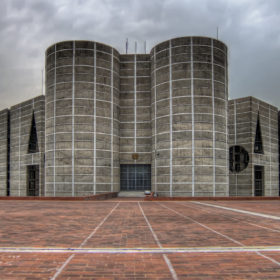
Bangladesh sets solar import standards
Complaints about sub-standard, cheap PV imports from China – and notably, India – have been heeded by Dhaka, which has issued a requirement for modules, inverters, charge controllers and batteries to attain IEC electrical standards.
Solar will power ahead to offer 20% more output for 25% lower module costs within 15 months
PV industry veteran Karl-Heinz Remmers recalls the trajectory of solar power this decade and predicts stronger than expected development for the ten years ahead.
European Utility Week: ‘The confidence is coming back’
The energy transition is becoming ever more apparent among power companies, as was evident at the European Utility Week event last week in Paris, which showcased the hopes and fears of energy companies. Rebranding next year to ‘Enlit’, the organizers aim to reach the whole energy industry.
Turkey to hold 1 GW solar tender in April
The Turkish government is planning to assign 100 solar projects with a capacity of 10 MW each across 39 different provinces via a new procurement exercise. The tender will be held on April 20, 2020.
