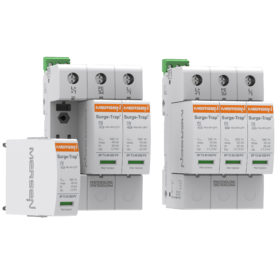
Mersen launches solar offensive
The French industrial equipment manufacturer expects to almost double turnover in solar by 2023. The company supplies materials for ingot production as well as providing electrical protection solutions such as fuses, fuse holders, heatsinks, wire management, disconnect switches, laminated busbars and surge protective devices.
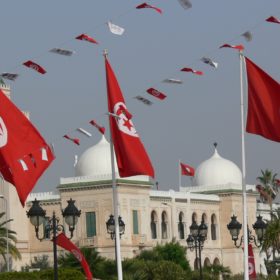
Tunisia shortlists developers for 500 MW tender
Up to 16 developers have prequalified in Tunisia’s tender for five PV projects totaling 500 MW, from a total of 38 participants. Unlike previous tenders, this one has attracted key international players including Enel, Engie, EDF, Fotowatio, TBEA and Canadian Solar.
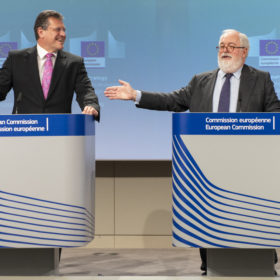
EU Commission presents plan to go carbon neutral by 2050
As part of its Paris Agreement obligations, the EU Commission has presented a carbon-neutral vision for 2050, which encompasses GDP growth through smart investments and public health savings.

Motech’s woes worsen with shedding of another 900 solar employees
Taiwan-based Motech Industries Inc. has announced a further reduction of staff. Overall, it plans to let 916 employees go in January. Its survival strategy includes focusing on high efficiency products and serving the local market. To this end, it says it has entered into collaborations with unidentified partners.
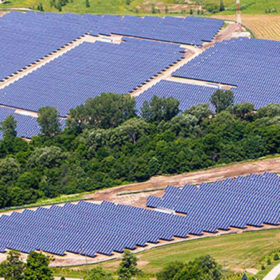
Canada’s regulator identifies profitable solar regions
In a new report, the Canadian National Energy Board has identified the regions with both the highest and lowest solar energy potential. Overall, the future of solar in the country appears bright, as power prices are expected to increase considerably over the next two decades.

Foresight Solar acquires 80 MW project portfolio in UK
The latest acquisition means the solar energy investment company has expanded its portfolio to 869 MW across 54 installations. The company says the increased diversification of its portfolio will improve operational efficiencies.
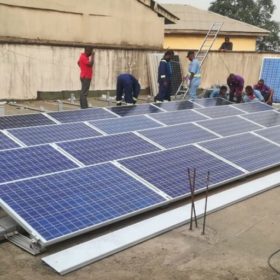
Minigrid development a win-win scenario for Nigeria, says Rocky Mountain Institute
A new report from U.S. based Rocky Mountain Institute outlines the potential for minigrid deployment to provide electricity to underserved communities around the world, to the benefit of utility companies, minigrid developers and communities. The report takes examples from Nigeria to illustrate this potential, but states that many of its findings could be applied to communities with limited or no access to electricity around the world.
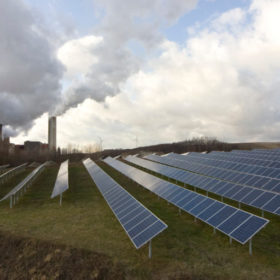
Renewables surpassed fossil fuels capacity in Germany last year
In their annual monitoring report, Germany’s Federal Network Agency and the Federal Cartel Office have analyzed the figures for 2017. At the end of last year, renewables accounted for around 112.5 GW of operational capacity, while conventional sources totalled 105.1 GW.

Tamil Nadu floats 500 MW solar tender with tariff cap
Supervising authority has given the Indian state’s distribution company the green light to conduct three 500 MW solar tenders. The move marks the first procurement exercise held by the state utility in almost 12 months.
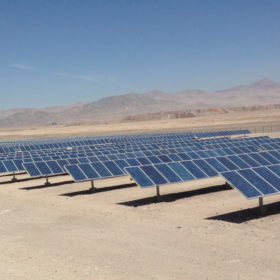
Developing countries biggest installers of renewables – BloombergNEF
In a new report, BloombergNEF notes a significant uptake in renewable energy in developing countries, which are clearly outperforming OECD countries. The trend is due to reductions in equipment costs and new business models that enable access to capital. Still, many emerging markets are also the biggest installers of new coal capacity. India and China alone, are said to account for 81% of newly added coal-fired power stations.
