EU Parliament approves RE directive
The European Parliament has today approved half of the eight legislative proposals of its Clean Energy Package, including the recast Renewable Energy Directive.
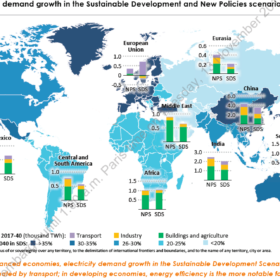
IEA World Energy Outlook: Solar PV capacity to overtake all but gas by 2040
Even in its low ball scenario, the International Energy Agency (IEA) imagines that installed solar PV capacity will overtake that of all other forms of energy apart from gas by 2040. Overall, it presents four scenarios in its 2018 World Energy Outlook, which show a changing energy landscape. While it finds that CO2 levels are, perversely, on the rise, and that many energy efforts in all but the most whimsical of its forecasts are far behind those needed to seriously address global warming, it still imagines coal, oil and gas playing a leading role in our energy mix going forward. It also sees “dramatic” transformation in the electricity sector. Long story short: Read something else if you want to take real climate action. We suggest The Drawdown.
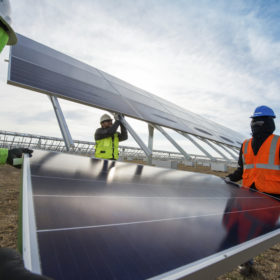
Caterpillar, SunPower team up on CAT-branded solar
Caterpillar-branded SunPower modules will be available in Southeast Asia, Africa, South America, and the Middle East – but not yet the United States.

Energy transition slowly forcing hand of oil, gas, but green investment still low
Increasing scrutiny is putting pressure on the world’s biggest oil and gas companies to jump aboard the green energy wagon. While some are making efforts to divest away from conventional energies, figures estimate that just 1.3% of total CAPEX in 2018 from the leading 24 companies will go to alternative energies.
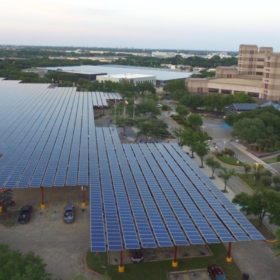
Lazard, Lazard, LCOE – what’s the cheapest energy?
Lazard’s newly released Levelized Cost of Energy Analysis 12.0, and Storage 4.0, finds that where utility scale wind works, it dominates – and that the unsubsidized cost to build new utility wind and solar facilities is equal to, and often less than running already-built fossil facilities.

Singapore launches blockchain-based renewable energy marketplace
Companies keen to offset their carbon emissions will be able to purchase renewable energy certificates at Singapore’s first blockchain-powered marketplace, launched by electricity provider SP Group.
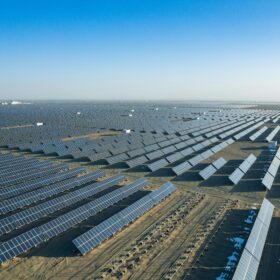
Solar awarded entire 200 MW capacity in France’s mixed energy auction
The entire capacity of an experimental mixed auction for wind and solar has been awarded to large-scale PV projects, the French Government announced. The average tariff price secured was €54.94/MWh.

Nothing can stop Spain’s solar train now
At an event held in Madrid this week, the Spanish solar sector made it clear that it is more than ready to achieve the government’s renewable energy targets, which include 50 to 60 GW of new PV capacity by 2030. The sector is experiencing a rebirth.

Toshiba pulls plug on UK nuclear plans leaving path for renewables open
Toshiba Corporation has today said it will abandon plans to build a 3.4 GW nuclear power plant in the United Kingdom. Despite this, the government says it remains committed to its new nuclear path; others say the news leaves room for further renewables development. New statistics, also out today, show the U.K. renewables industry flourishing.
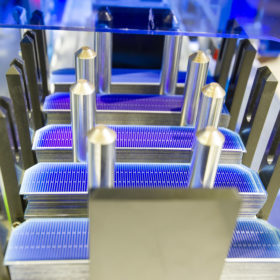
Solar sector to add 552 GW by 2027 led by China
The leading trio – China, the United States and India – will comprise 70% of the projected 552 GW of solar capacity, which will be added between end-2017 and 2027, finds Fitch Solutions, which has revised down its original forecast for solar capacity growth in China. The curbed growth in China, due to subsidy cuts and restricted access to the United States and India, is expected to squeeze domestic solar equipment manufacturers, but also lead to access to cheaper solar panels in other smaller markets.
