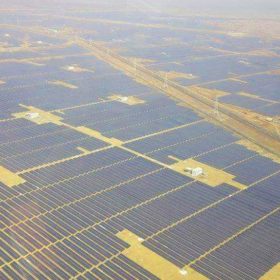
Greenko calls off plans to buy Orange Renewable
Hyderabad-based renewable energy major, Greenko Group has abandoned plans to buy AT Capital-backed Orange Renewable.

Egypt wants cheaper solar bids, lowers bar to $0.025/kWh
The Egyptian Electricity Transmission Company (EETC) has informed all participants of a tender for the deployment of 600 MW of PV capacity in the West of Nile Area that it won’t accept bids exceeding US$0.025/kWh. In its tender for the 200 MW Kom Ombo solar project, the lowest bid, submitted by Saudi energy company ACWA, was $0.02752.
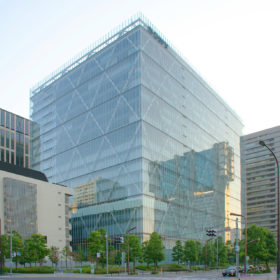
Sony lays out plans to go 100% renewable by 2040
Japanese electronics giant, Sony has become the latest major organization to commit to a 100% renewable energy target for all of its operations. The company has joined the RE100, a global NGO initiative promoting renewable energy, and plans to reach its target by 2040.
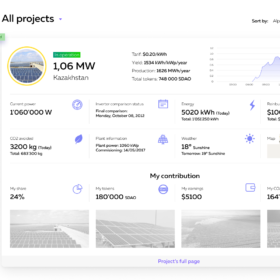
Blockchain solar PV investment fund comes together with energy storage platform
Solar DAO, a digital, autonomous, closed-end, utility-scale PV project investment fund, has announced its partnership with Powerchain, decentralized platform for energy storage, which allows prosumers to buy, store and sell energy.
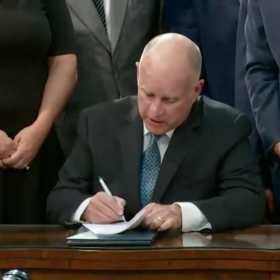
California governor signs 100% clean electricity bill
SB 100 puts California on a path to 100% zero-carbon electricity. What does that mean for the rest of the nation?
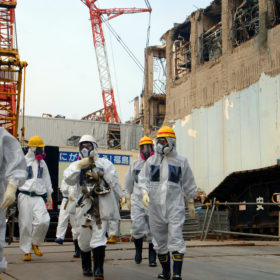
Nuclear power is being left behind, industry experts say
The 2018 edition of the Nuclear Industry Status Report (WNISR) reveals that nuclear power capacity grew by only 1% in 2017, while wind and solar saw their share increase by 17% and 35%, respectively. The report also recognizes that solar and wind are now the cheapest grid-connected sources of energy. Investments in new nuclear plants, on the other hand, are only being driven by public support, and by nuclear weapon states.

Solar, wind power could increase rainfall in the Sahara
The Sahara Desert, and the Sahel region, could be set to take advantage of large-scale wind and solar power projects covering huge surfaces.
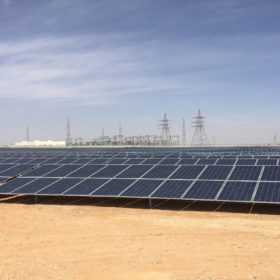
Jordan Round 3 PV auction attracts lowest bid of $0.02488/kWh
The results of Jordan’s Round 3 solar PV auction have been announced. Jinko Power (HK) Company Limited submitted the lowest bid of US$0.02488/kWh. Jinko, along with two other companies, are now in pole position to be awarded projects. A final decision will be made after the financial offers have been validated, among other things.
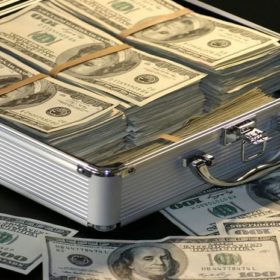
US utility-backed fund raises $681 million for advanced energy technologies
Energy Impact Partners, who partners with 14 electric utilities, has raised US$681 million to continue investing in technologies that have a high probability of influencing the future power grid.
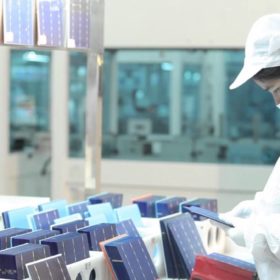
PERC market to reach 158 GW by 2022
Taiwan-based analyst firm, WisolPro says the global capacity for PERC cells is rapidly increasing, with the technology likely to replace polycrystalline cells. HJT, thin film, and n-type PERT technologies are also on the rise.
