Africa solar: competitive tenders or negotiated deals?
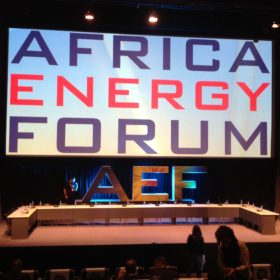
Given increasing activity in the solar PV sector in Africa, a critical question has emerged: should African states aim for competitive tenders or negotiated deals? This question was among those discussed at the Africa Energy Forum (AEF) that took place last week in Copenhagen, Denmark.
BNEF: Coal to fade as cost of renewables falls even faster
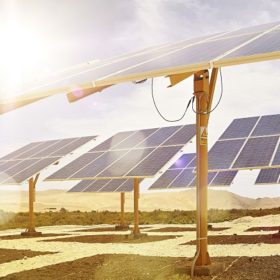
The latest long-term forecast from analysts Bloomberg New Energy Finance (BNEF) predicts solar energy costs to drop a further 66% by 2040, and onshore wind by 47%. Given these predictions, BNEF expect that renewables will undercut the majority of fossil based generation by 2030, even in India and China.
Yingli suffers Q1 revenue and shipment slump
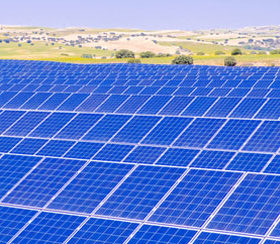
The tier-1 Chinese solar company could only post $180m in revenue for the first quarter of the year, while module shipments of 370 MW were almost half the number shipped in Q4 2016. Cash position remains precarious despite staunching of heavy losses suffered last year.

Russia allocates 520 MW of PV capacity in 2017 renewable energy auction
The auction was open to solar, wind and hydropower. Projects selected in the tender must be commissioned between 2018 and 2022.
EBRD and CTF provide $ 44.5 million for solar park in Kazakhstan
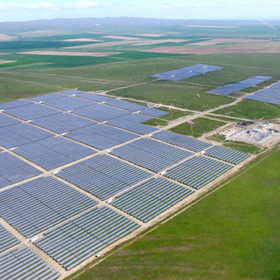
The 50 MW Burnoye Solar-2 project will require a total investment of approximately $80 million and will be located in the southern region of Zhambyl.
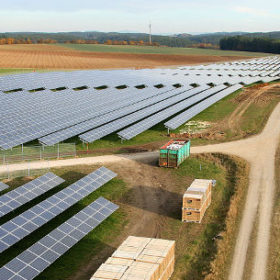
Germany’s auction for large-scale solar concludes with average price of €0.0566/kWh
The German government selected 32 project proposals with a combined capacity of 201 MW in the auction. For the first time, it was possible to submit proposals for large-scale PV projects on agricultural land in the regions of Bavaria and Baden-Württemberg. This has considerably lowered the biddings.

Oman to tender 200 MW of solar by the end of 2017
The country’s power utility is currently seeking legal advisors for the tender it intends to launch for its first large-scale solar project.
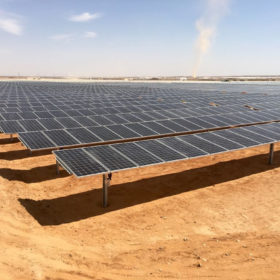
African Development Bank considering $18 million loan for 50 MW PV project in Egypt
The Alcazar II solar project is being developed in the 1.8 GW Benban solar complex by UAE-based Alcazar Energy.
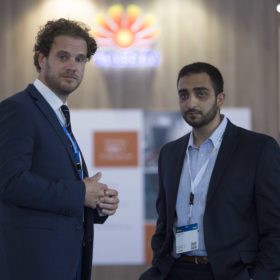
pv magazine at Intersolar Europe: Trade disputes the norm in global PV
With Solarworld’s recent insolvency announcement, questions regarding the potential for trade disputes to affect the global solar industry have once again been brought to the fore. At Intersolar Europe 2017 in Munich, pv magazine spoke with Benjamin Attia of GTM Research about the organization’s latest research into this broad reaching topic.

Pamir Energy lands Ashden Award for increasing energy access in Tajikistan and Afghanistan
Pamir Energy, a project company of the Geneva-based Aga Khan Fund for Economic Development, has won a prestigious international award for bringing clean energy to eastern Tajikistan and northern Afghanistan.
