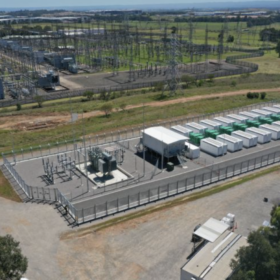
Australia’s Transgrid shortlists 2 GW of batteries for NSW grid
Australian transmission company Transgrid has shortlisted nine battery energy storage projects with a combined capacity of 2 GW to provide essential system strength services to the electricity grid in New South Wales from later this year.
TotalEnergies, Masdar to merge renewables activities in nine Asian countries
The two major developers plan to establish a joint venture company with equal ownership that will be their sole vehicle for building, owning and operating both existing and future solar, storage and wind projects across nine Asian countries.
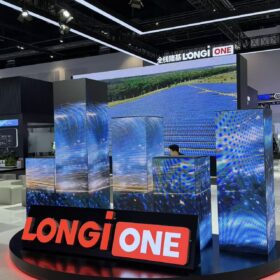
Longi launches integrated solar-plus-storage platform strategy
China-based solar manufacturer Longi is shifting from a multi-vendor system design to a unified solar-plus-storage architecture built around in-house technologies.

US adds 26.6 GW of solar in 2025 as renewables dominate
Solar and wind accounted for nearly 90% of all new utility-scale generating capacity added to the US grid through December 2025, according to the Federal Energy Regulatory Commission (FERC).
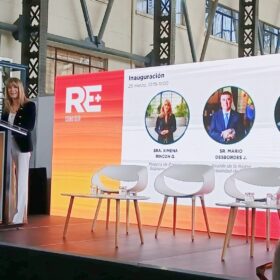
Key takeaways from Chile’s Re+ Cono sur
Chile’s Energy Minister Ximena Rincón called for a more proactive approach to renewables, storage, and electrification at the RE+ Southern Cone Summit last week, highlighting the need to reduce fossil fuel reliance and invest in enabling infrastructure.
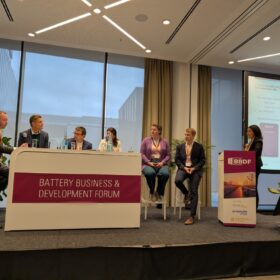
BBDF 2026: How financing standalone vs. co-located projects really works
The “lab” session at Battery Business & Development Forum 2026 made transparent how different stakeholders evaluate and view energy storage projects between standalone and co-located options, and where views diverged.
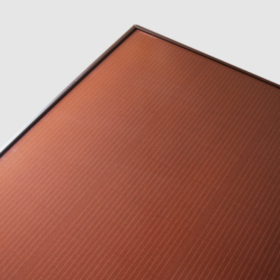
Solar Fabrik launches 400 W red-brown module for heritage roofs
Solar Fabrik has introduced a 400 W red-brown glass-glass PV module designed to meet strict aesthetic requirements for historic and protected buildings, offering a 20.02% efficiency and compatibility with traditional tiled rooftops.

BBDF: German network agency to release BESS grid fee framework soon
Germany’s Federal Network Agency (Bundesnetzagentur) is set to present a framework for future network fees in May 2026, with industry discussions highlighting how these charges could interact with flexible connection agreements and affect battery energy storage system (BESS) returns.
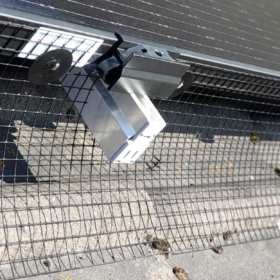
Sassmann develops ‘solar panel grid’ for pigeon protection
Sassmann, a Germany-based company, has developed a modular “solar panel grid” system designed to prevent pigeons from nesting beneath photovoltaic modules.

Abu Dhabi extends solar self-supply policy to residents
The UAE capital is expanding its solar self-supply policy to the residential sector, after first launching for the agricultural sector in February.
