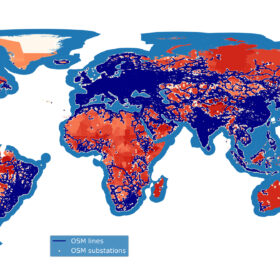
Open-source optimization tool for energy systems offers global coverage
An international research group developed the PyPSA-Earth model for energy system and power studies, technology evaluation, phase-out plans, diversification, and market simulations. It offers accessibility to countries without defined energy planning scenarios.
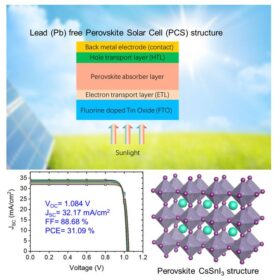
New perovskite solar cell design promises 31.09% efficiency
Chinese researchers have developed a solar cell using CsSnI3 perovskite, known for its unique phase transitions and near-IR emissions. By simulating the device with various electron transport layers (ETLs) and hole transport layers (HTLs), they determined that the optimal cell could be created using a titanium oxide (TiO2) ETL and a nickel(II) oxide (NiOx) HTL.

Indian utility to assess feasibility of 130 MW floating solar plant
NTPC says it will assess the feasibility of a 130 MW floating solar plant in the Indian state of Tripura, while Gujarat State Electricity is seeking consultancy services for a proposed 1.5 GW floating solar plant.

Netherlands allocates 1.9 GW of PV in 2022 SDE++ round
Rijksdienst voor Ondernemend Nederland (RVO), the Dutch state-run agency that manages the SDE++ program, said that its latest tender round has allocated 1.051 MW of PV capacity for commercial and industrial solar systems, along with 862 MW for utility-scale PV plants to be constructed on land or water.

Japanese group using second-life solar panels at construction sites
Taisei Corp. has installed second-life solar panels at Fukoka Airport’s new office buildings in Japan to test their performance for temporary power production.

Field test supports viability of 20% hydrogen in German gas network
TÜV Rheinland, Rheinische Netzgesellschaft, and GVG Rhein-Erft have supplied 100 households in Erftstadt, Germany, with gas mixed with 20% hydrogen. They have found there were no disruptions to systems, devices, or the network itself.

New platform to purchase and sell PV, wind projects in Spain
NTeaser is a new platform that connects developers and investors to sell renewable energy projects and assets without intermediaries.

President Biden vetoes legislation to repeal moratorium on solar tariffs
Biden vetoed the repeal, saying it would undermine the efforts to ramp up domestic manufacturing to support a burgeoning solar industry and would create uncertainty for businesses and workers in the U.S. solar industry.

Tongwei led global polysilicon capacity in 2022, says Bernreuter Research
The world’s top four largest polysilicon producers in 2022 were Chinese companies, led by Tongwei with 345,000 metric tons (MT), followed by GCL Technology, Daqo, Xinte, and Wacker Chemie.
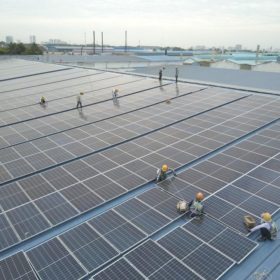
Vietnam’s solar development moves to rooftops, net metering
The Vietnamese government has announced a $135 billion energy strategy, with half of the country’s residential rooftops to be equipped with PV systems under a net-metering scheme. The nation also aims to become a power exporter by the end of the decade.
