Chinese Industry Brief: Risen plans RMB44.65 billion for solar expansion along supply chain
Furthermore, speaking about its joint venture with Trina Solar for the development of 15GW of ingot manufacturing and 15GW of wafer cutting projects, Tongwei said all work will be finished and put into production in H1 2022. PV prices are also seeing declines along the solar supply chain.

First Li-ion battery rolls off Northvolt’s Swedish production line
In what has been described as a European first, Northvolt announces that the first lithium-ion battery has rolled off the production line at its Swedish manufacturing facility in Skellefteå.
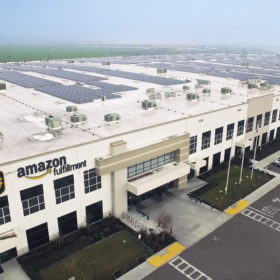
Stepping UP in 2021: #3 Sustainable electricity and corporates’ critical solar role
Despite the global Covid-19 pandemic and recession, corporate purchases of clean energy are booming. Several factors are driving this trend, including falling costs, a heightened appetite for sustainability among consumers and investors, and increased political will for net-zero development. In recognition of this, the UP Initiative spent Q3 2021 investigating sustainable electricity supply. How are PPA models evolving? What are the critical issues around residual energy? And how can greenwashing be avoided? Read on to discover more.
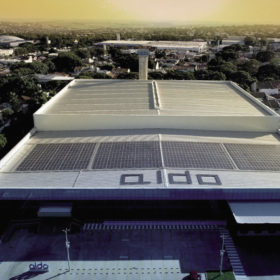
Brazil heads for a solar installation rush
Brazil’s deployment of distributed generation PV (below 5 MWp) has exploded from a total capacity of 500 MW in 2018 to 7 GW by September of this year. The trigger for this increase, alongside rocketing electricity prices, was the 2019 proposal of law 5829, writes IHS Markit analyst Angel Antonio Cancino. The proposal is expected to pass into law at the end of this year and will gradually introduce grid-access charges for residential and commercial system owners.
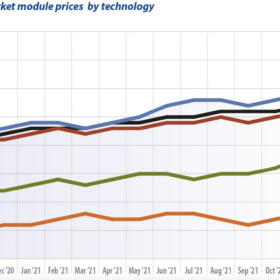
PV module price index: The price spiral winds up
The title of Martin Schachinger’s October market commentary was “Module prices set to rocket back to 2019 levels.” This month, he writes that prices have already reached December 2018 levels and notes that there is no reversal in sight. Prices for all module technologies have once again risen by an average of 3 percentage points since last month.
Stepping UP in 2021: #2 Solar workers’ rights and leading by positive example
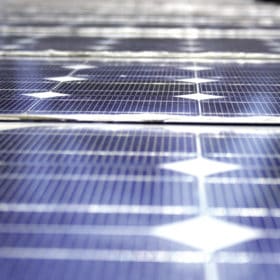
There is increasing pressure, globally, for companies to be held more accountable, particularly when it comes to sustainability and just working conditions, and this topic is only growing in importance. With this in mind, pv magazine’s UP Initiative spent Q2 2021 looking at what solar and energy storage companies could do to lead by positive example when it comes to the workers, often far removed, involved in the production of their products and services.
What COP26 means for solar
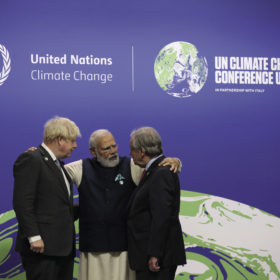
COP26 was either a great success or an abject failure, depending on who you talk to. What matters for the solar industry is the extent to which decisions agreed in the Glasgow Climate Pact are going to change the direction of the energy and financial sectors.
Stepping UP in 2021: #1 How agri-PV could address two of the biggest sustainability challenges of our times
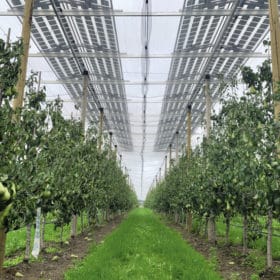
2021 marked the second year of pv magazine’s UP Initiative where we shined a spotlight on sustainability in the solar industry. Over the course of 12 months, we focused on four key issues. First up was agrivoltaics – the combination of agriculture and solar energy – in recognition of this emerging market. The goal was to understand the potential benefits and economic, political, and technical challenges of such an innovative partnership. Read on to discover our coverage from this quarterly theme and watch out over the coming days for the topics of Workers’ rights, Sustainable electricity and corporates’ critical solar role, and Urban Solar.
Iran brings 150MW solar cell factory online
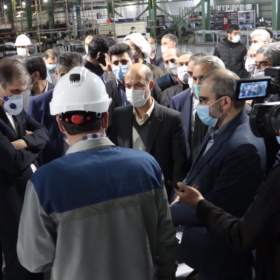
Dec. 23 saw the inauguration of a new solar cell factory in the city of Khomeini, according to the Iranian government’s Renewable Energy and Energy Efficiency Organization. The factory, operated by Tehran headquartered company Mana Energy Pak, will be among the first in the region to produce silicon solar cells.
A 200 GW solar year in 2022
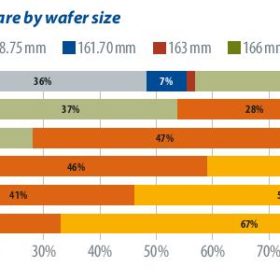
Structural imbalances in the supply chain and the energy intensity and consumption controls that China imposed in late September have caused prices for most PV module materials and components to continue to rise. Shipping fees and PV plant construction costs also remain high. PV plants in many regions will therefore be postponed until next year, but it remains unclear when module prices will start to fall. Despite these challenges, the global race to cut carbon emissions continues, and InfoLink’s Corrine Lin forecasts a bright future for PV deployments in 2022.
