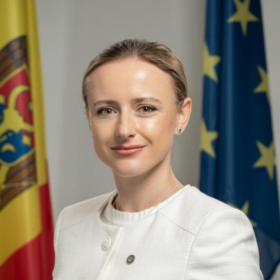
‘Photovoltaics are, first and foremost, about energy security’
In an interview with pv magazine, Carolina Novac, Secretary of State at Moldova’s Ministry of Energy explains how the country raised its solar capacity to 1 GW while advancing wind, storage, and regulatory reforms to strengthen energy security and reach 30% renewables by 2030. The Moldovan government is now focusing on scaling BESS, modernizing the power market, and enhancing cybersecurity through stronger policies and international cooperation.
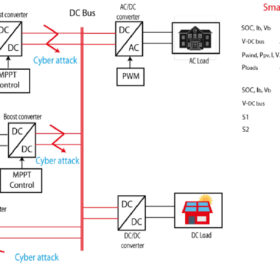
All emerging cyber threats targeting power infrastructure at a glance
Researchers in Moroco analyzed cybersecurity challenges in smart grids, highlighting AI-driven detection and defense strategies against threats like distributed denial-of-service, false data injection replay, and IoT-based attacks. They recommend multi-layered protections, real-time anomaly detection, secure IoT devices, and staff training to enhance resilience and safeguard power system operations.

Hydro-Québec launches grant for residential, commercial solar
Hydro-Québec has introduced a grant offering up to CAD 1,000 ($718.40) per kilowatt installed, covering up to 40% of eligible costs to accelerate rooftop solar adoption and reduce payback periods for residential and business customers in the Canadian province of Québec.

‘Motherhood further shaped my leadership perspective’
This week Women in Solar+ Europe gives voice to Margarita Licht, Product Manager BESS & Charging at Germany’s Goldbeck Solar. She says diverse perspectives and cognitive styles are essential in the solar and energy storage sector, enabling smarter solutions, effective problem-solving, and long-term planning. She also emphasizes that creating inclusive environments, fostering allyship, and choosing workplaces that value authentic strengths empower growth and drive meaningful impact.

New intrusion detection systems boost protection of SCADA systems against cyber threats
An international reserch team developed two deep learning-based IDS models to enhance cybersecurity in SCADA systems. The hybrid approach reportedly improves detection of complex and novel cyber threats with high accuracy, adaptability, and efficiency, outperforming traditional methods across multiple datasets.

France introduces cybersecurity, sustainability requirements in solar tenders
The French authorities announced they will assign 288 MW of PV in the 2026 tender for projects ranging from 100 kW to 500 kW in size and 925 MW in the procurement exercise for PV systems exceeding 500 kW. The tenders will include cybersecurity requirements as well as provisions to support European manufacturing.

South Africa’s Eskom extends small-scale solar registration fee waiver
The South African Photovoltaic Industry Association has welcomed the utility’s decision to extend its registration fee waiver for solar systems until the end of September, as it calls for the country’s municipal distributors to streamline their own processes for small-scale embedded generation systems.
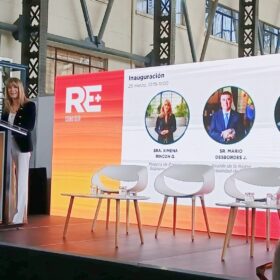
Key takeaways from Chile’s Re+ Cono sur
Chile’s Energy Minister Ximena Rincón called for a more proactive approach to renewables, storage, and electrification at the RE+ Southern Cone Summit last week, highlighting the need to reduce fossil fuel reliance and invest in enabling infrastructure.

BBDF: German network agency to release BESS grid fee framework soon
Germany’s Federal Network Agency (Bundesnetzagentur) is set to present a framework for future network fees in May 2026, with industry discussions highlighting how these charges could interact with flexible connection agreements and affect battery energy storage system (BESS) returns.

Abu Dhabi extends solar self-supply policy to residents
The UAE capital is expanding its solar self-supply policy to the residential sector, after first launching for the agricultural sector in February.
