
‘I’m proud to work for a company led by a woman’
This week, Women in Solar Europe (WiSEu) gives voice to Aleksandra Gabryjalowicz-Watla, Head of Partnerships Wind & Solar Germanyat Statkraft Erneuerbare GmbH. She explains how being out “in the field” may mean more exposion to occasional opposition or bias, but she also says how to properly react to bias or even disrespect.
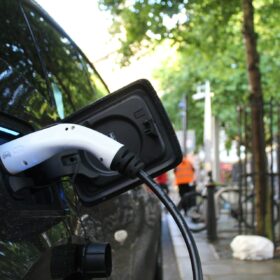
Europe says China’s EV value chain benefits from unfair subsidies
The European Union plans to impose tariffs of up to 38% on battery electric vehicles (BEVs) from China, as an ongoing investigation into imports has shown that the value chain benefits from unfair subsidies.

More states in the U.S. now require smart inverters, enabling more distributed solar
Pennsylvania and Minnesota have joined six other states in requiring smart inverters for distributed solar and storage. Certain utilities in 13 states and Puerto Rico also require smart inverters, while six states are considering the requirement. Smart inverters enable more solar on distribution circuits.
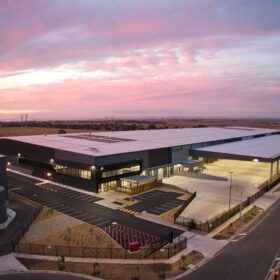
Warehouse rooftop solar, batteries could unlock 28 GW in Australia
Nexa Advisory says sluggish rooftop solar and battery storage uptake by businesses in the Australian state of New South Wales points to a 7 GW missed opportunity, and 28 GW nationally.
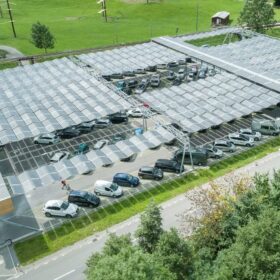
Swiss say ‘yes’ to new law to expedite solar development
Swiss voters have approved a new electricity law that mandates PV systems on large buildings, supports electricity communities, and encourages collective self-consumption.
Indonesia targets over 5.7 GW of rooftop solar by 2028
The Ministry of Energy and Mineral Resources in Indonesia has set a quota of 5,746 MW of rooftop solar to be deployed between 2024 and 2028. The Jakarta-based Institute for Essential Services Reform anticipates rooftop solar to be more commonly adopted by commercial and industrial consumers than residential users, following the abolishment of net-metering earlier this year.

U.S. solar trade case moves forward
The U.S. International Trade Commission unanimously voted that solar cell manufacturing in Cambodia, Malaysia, Thailand, and Vietnam, supported by local incentives, is harming U.S. industry. This decision paves the way for the Commerce Department to finalize its determinations on countervailing duties by July 18 and anti-dumping duties by October 1.
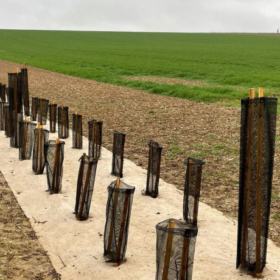
Hedge planting for community acceptance of agrivoltaics
The Hauts-Plateaux de l’Yonne Energy Association (EHPY) has started planting 5.8 km of hedges in central France to integrate 14 agrivoltaic projects into the landscape. The initiative aims to improve project acceptance and promote biodiversity.
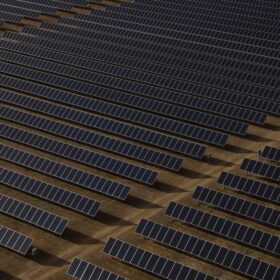
IEA urges countries to accelerate renewables deployment
A new report from the International Energy Agency (IEA) suggests that the world could miss out on a target of 11,000 GW of global renewables capacity by the end of the decade, as agreed at COP28. It also predicts that solar will become the world’s largest source of installed renewable capacity, surpassing hydropower.

French agency warns against unchecked reuse of secondhand solar modules
Soren, the French environmental agency, has warned that uninstalled panels are often resold or exported through loosely regulated reuse channels, especially to developing countries.
