US solar industry standards for supply chain transparency
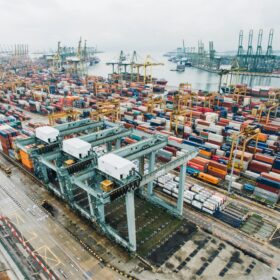
The Solar Energy Industries Association (SEIA) has submitted a draft industry standard to help companies comply with US Customs and Border Protection (CBP) traceability requirements for imports of solar components.

Malaysian scheme lets businesses buy on-grid renewables from developers
A new initiative now allows businesses in Malaysia to purchase green electricity directly from renewable energy developers through the national grid. The country’s Ministry of Energy Transition and Water Transformation (PETRA) estimates that it will generate more than MYR 10 billion ($2.4 billion) in direct investments.

Taiwan improves PPA rules for renewables
The Taiwanese government has introduced a new, favorable framework for renewable-energy power purchase agreements (PPAs). Large energy consumers are no longer required to buy the entire output of large-scale facilities.

Australian solar installer fined over workplace injury
The Australian authorities recently imposed a AUD 40,000 ($27,260) on a solar installation company after a worker fell 10 meters through an asbestos roof in the state of Victoria.

‘It may be hard to find women role models, but they’re out there’
This week, Women in Solar Europe (WiSEu) gives voice to Medha Subramanian, Senior Power Systems Engineer at Elgin Energy. She says finding good mentors and managers is key to learn and grow in a professional journey. “It’s so helpful to get out to networking events, attend workshops and webinars, cold email people if you have to, and find mentors who inspire you and those who have a lot of knowledge to impart and experience to draw from,” she states.
IEA calls for stronger solar, wind integration measures
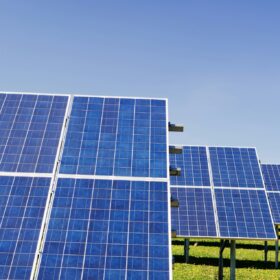
The International Energy Agency’s (IEA) latest report warns that failing to support integration at the point of deployment could jeopardize up to 15% of solar and wind projects by 2030. This shortfall would reduce their combined share of the global electricity mix by 5%.
EU approves €1.2 billion renewables grant scheme in Poland
The European Commission has given the green light to a €1.2 billion ($1.3 billion) state aid program in Poland that provides direct grants to companies producing solar panels, batteries, heat pumps, and other renewable equipment components.
Circular economy and solar photovoltaics: is there a case for second-life PV modules?
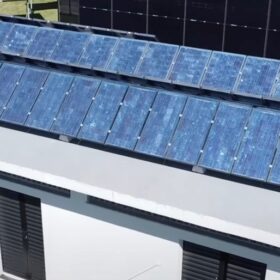
What happens to a solar PV module after its expected 25-year operational life? With around 2 TW of rooftop and utility-scale PV already deployed worldwide, and a large number of them being retired before operating for 15 years, the amount of PV modules being discarded is growing every year. As PV modules are becoming cheaper by the day, and with the constant improvement in PV module efficiencies, many utility-scale PV power plants are starting to be repowered even before they reach their expected 25 years of operation. Many of these modules are still performing well. Can they be deployed for a second life to provide solar electricity for a few more years?

Sweden to lower solar subsidy, scrap tax breaks for electricity micro-production
The Swedish government is considering reducing the subsidy for solar installations and removing the income tax reduction for households and businesses that micro-produce renewable electricity. Svensk Solenergi, Sweden’s leading solar association, has criticized the proposals.
Quebec to run 150 MW solar tender before end of year
The government of the Canadian province of Quebec is calling on utility Hydro-Quebec to run two solar tenders totaling 300 MW – one by the end of 2024 and another by the end of 2026. This marks the province’s first call for solar development on a commercial basis.
