
Covid-19 weekly round-up: Dormant MiaSole claims Covid support in the US as Indian new solar figures slumped
Plus, analyst WoodMac says a fall in the cost of power generation in Japan during the public health crisis will help drive renewables investment and the Indian government has relaxed borrowing rules for its financially crippled electric utilities.
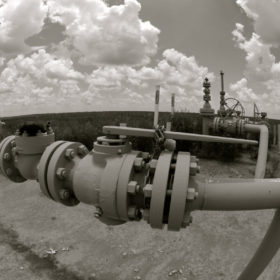
Global green hydrogen project pipeline reaches 50 GW
International thinktank IEEFA says there are 50 viable green hydrogen projects under development with an estimated renewable energy capacity of 50 GW and the potential to produce 4 million tonnes of the fuel annually.

Hanwha Q Cells was biggest winner in Portuguese solar auction
The South Korean solar panel maker secured around 300 MW of the 700 MW awarded in the procurement round. The other winners are reportedly Spanish power company Iberdrola, Italian peer Enel and French-owned developer Tag Energy.

Global daily round-up: Israel set to import solar power from Jordan and a hydrogen deal for South Holland
Plus, some 5 GW of solar could be heading to Botswana and Namibia and news of a new automotive fuel cell building in Ulm, Germany.
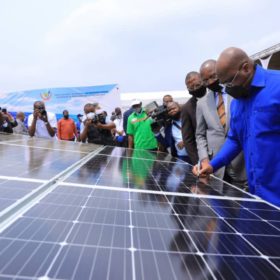
Giant solar project announced in DR Congo
President Félix-Antoine Tshisekedi Tshilombo has laid the foundation stone for a vast, 1 GW Kinshasa Solar City photovoltaic project aimed at improving the capital’s power supply.

More details emerge of missing deposits as auditor reduces Panda Green’s 2019 losses
There was rare good news for the remaining independent shareholders of the state-controlled solar developer, as the overdue 2019 figures were finally published, with new auditor PwC shaving almost $15 million off a near-$540 million loss.
Daily news round-up: UK reveals details of next renewables auction, Iran’s first floating PV and more hydrogen
Taiwanese cell manufacturer Inventec Solar reportedly halted production this month and Ireland is preparing to remove rooftop solar panel restrictions, according to the Irish Independent.
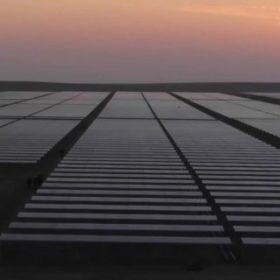
China Three Gorges buys 570 MW of Spanish solar
The power company has won the race to acquire a 572 MW, 13-project solar plant portfolio owned by Madrid-based, Canadian-U.S.-controlled developer X-Elio.
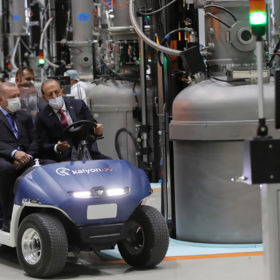
Erdogan opens ingot-to-module solar factory in Ankara
The $1.4 billion cost includes a 1 GW solar field 260km away in Konya. The factory was developed solely by Kalyon Solar Technologies after development partner Hanwha Q-Cells walked away from the project.
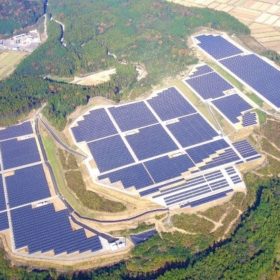
Japan’s struggle to drive down renewables costs
A nation famous for high electricity prices has seen power costs fall 15% this year, according to analyst Wood Mackenzie, a figure which will help attract $100 billion of solar and wind investment to 2030. Renewables will have to work even harder, however, to displace fossil fuels in hydrogen production.
