
Chinese PV Industry Brief: Module manufacturers call on government to ease PV glass limits
China’s largest PV manufacturers claim limits placed on solar glass production two years ago, to prevent over production, are now causing an industry bottleneck.
Terawatt scale by 2050
In a new paper published in the journal of Renewable and Sustainable Energy, renowned PV scientist Pierre Verlinden examines the solar industry’s trajectory towards the 70 TW of installed capacity that will be needed by 2050, as the best choice for meeting climate targets set out in the 2015 Paris agreement. Silver consumption and recycling, according to Verlinden, will be the biggest challenges in the years to come, as well as ensuring balanced growth and avoiding a major installation rush in the years close to 2050.

IRENA: Urban renewables infrastructure needs to be concentrated in fastest-growing cities
Only 1% of Africa’s utility scale solar projects are within 20km of city limits, according to a new report, despite the fact the continent is expected to have around a billion more city dwellers by mid century.

Reform meets opposition
Since President Andrés Manuel López Obrador’s election at the end of 2018, renewable energy in Mexico has faced an uncertain regulatory environment. The current government is focused on restoring the power and influence of Mexico’s state-owned energy companies. But it is now at a crossroads, as the previous administration aimed to open the segment up to foreign investment. Maria Chea of IHS Markit examines the policy decisions the government has taken this year and how these have soured private investor sentiment. These changes will likely weigh on utility-scale PV procurement in the country through 2024.

European islands make decarbonization pledges
Often dependent on fuel imports from the mainland and frequently powered by fossil fuels, islands have taken center stage at an online forum which builds on a political process kicked-off by Croatia’s presidency of the European Council.

Switzerland set to add 400 MW of PV in 2020
Applications for solar rebates have almost doubled thus far this year, said Swissolar, which sees year-on-year growth in all rooftop PV segments.

Italy’s Lombardy region adds another €20 million for residential PV+storage
Italy’s most affluent region will continue to support solar+storage installations with rebates, and the authorities plan to roughly triple funding this year.
‘China must put EV battery reuse at heart of net-zero ambition’
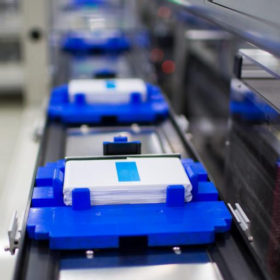
The centralized nature of policymaking in Beijing would enable component standardization to ease the transition from EV to stationary energy storage use, according to Greenpeace East Asia.

REC Silicon could restart poly production at Moses Lake
The Norwegian polysilicon maker has been been frozen out of the Chinese solar market by political tensions between Beijing and the U.S. and mothballed its Washington State production line last year. However, two recent business agreements could change all that.

World is set for 3.3C temperature rise, predicts Bloomberg
Although the global solar industry might be cheered by the prospect of a healthy slice of an expected $12 trillion, 30-year windfall, governments are falling far short of steering us clear of catastrophic global heating, according to the analyst’s latest New Energy Outlook report.
