
The weekend read: A green road to recovery
In 2019, the European Commission presented the European Green Deal, under which it aims to become climate-neutral by 2050. In May of this year, the commission also unveiled a new instrument to fund the bloc’s recovery from the Covid-19 crisis, in line with the Green Deal principles. This reinforced the drive for renewables investment. pv magazine examines what the latest developments mean for solar.
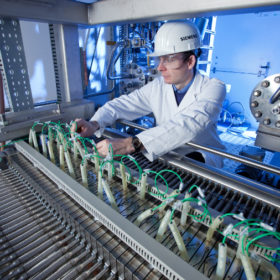
Leaked: EU hydrogen strategy eyes €140 billion turnover by 2030
The European Commission has sent the European Green Deal on its way and a preliminary version of its anticipated hydrogen strategy has been leaked. The plan does not lack ambition, as the EU seeks to assert tech leadership in green hydrogen through coordinated efforts across the value chain.

French railway operator buys 40 MW of power through solar PPA
The 15 to 20-year power purchase agreement is expected to provide around 2% of the electricity consumption of all SNCF passenger trains.
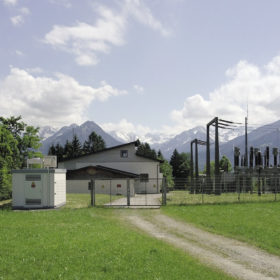
EU needs 108 GW of battery storage for 2030 climate targets
The EU appears poised to roll out battery storage capacity to provide flexibility to systems with more variable renewables. The European Commission’s Directorate-General for Energy has also noted policies that must be addressed to establish a level playing field for storage.

Supply chain concerns will drive EV battery recycling policies
With electric vehicles starting to gain traction, the International Energy Agency’s updated, ten-year e-mobility forecast has suggested geopolitical and economic concerns will trump environmental niceties when it comes to encouraging recycling. But what price ever-cheaper batteries?

Covid-19 weekly round-up: Ups and downs from the US residential market and one Swedish city tries to attract Europe’s best and brightest
Industry body SolarPower Europe is trying to stay bullish about the lingering effects as the continent starts to come out of lockdown and one analyst has predicted a healthy large scale solar market will carry the US through the crisis.
Battery performance standard for residential and commercial applications
Researchers have proposed a new battery performance standard for Australia and possibly the world. If adopted, the standard could clarify consumer confusion around which energy storage system is right for them.
Global solar capacity may reach 1,448 GW in 2024
SolarPower Europe has predicted the volume of new PV capacity added this year will be 4% less than last year’s figure because of the Covid-19 crisis. At the end of 2019, the world had topped 630 GW of solar. For 2020, around 112 GW of new PV capacity is expected, and in 2021, newly installed capacity could be 149.9 GW if governments support renewables in their coronavirus economic recovery plans.

Ukraine government presents FIT cuts and new auction rules to parliament
The Ukrainian government’s conference rooms have been stuffier than usual lately, as policymakers and renewable energy industry representatives attempted to thrash out a compromise to reduce the financial burden left on the administration by a feed-in tariff incentive regime which drove almost 2 GW of generation capacity. The resulting retroactive cuts to payments, outlined below by Ukraine-based lawyer Svitlana Teush, have at least had input from both sides.
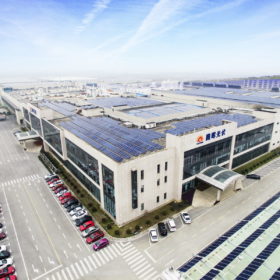
Chinese PV Industry Brief: 3 GW of new heterojunction capacity and a 1 GW solar-storage-hydrogen project
Talesun has announced plans to deploy 1 GW of new heterojunction solar cell production capacity, while rack manufacturer Akcome Technologies revealed plans to annually produce 2 GW of the same tech. Panda Green, meanwhile, has secured the exclusive rights to a 1 GW project featuring PV and photothermal generation.
