France to fund innovative off-grid renewables projects in Africa
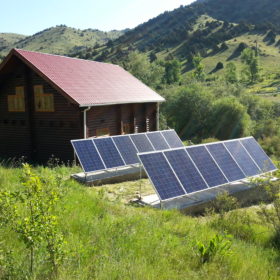
The French development agency and the environment ministry have a €1.6 million budget to finance novel off-grid projects from companies and NGOs operating with local partners in Africa.

Hanwha Q Cells opens largest solar factory in the Western Hemisphere
The 300,000 sq ft factory in Dalton, Georgia has the capacity to produce 12,000 PV modules per day – 1.7 GW worth annually for panels able to produce the same peak generating capacity as the Hoover Dam.
Austria scraps its sun tax
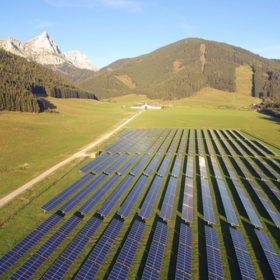
The nation’s political parties have found agreement on a green electricity package which is expected to create stable conditions for the next three years. From next year, €36 million will be made available annually for the further support of PV systems and energy storage.

Canada’s Saskatchewan province to halt net metering for solar
Utility SaskPower is set to close the net metering open to systems up to 100 kW in size once a 16 MW cumulative generation capacity limit is reached in the province.

Germany lifts cap on solar FIT program with new Climate Change Act
While the solar industry will welcome the move, the feed-in tariff paid to small systems is still reducing thanks to the volume of new capacity installed every quarter. Announcing a wide-ranging policy package on Friday, Angela Merkel admitted Germany will miss the carbon emission target set for next year.

The weekend read: The specter of PV protectionism
Trade tariffs are spreading across the global PV industry. The United States has been especially active with its sandwich of old antidumping and countervailing duties coupled with new Section 201, 232 and 301 duties. Some of these are part of the Sino-U.S. trade dispute; others impact not only Chinese producers, but manufacturers around the world. So, what will be the impact of this new era of PV protectionism on the solar sector?
South Africa’s water-energy nexus leaves room for improvement
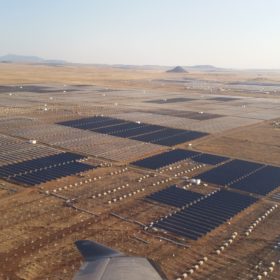
A team of researchers modeled the country’s energy future, finding that the drought plagued municipalities could benefit massively from large scale renewables deployment. The current reliance on coal-fired power stations causes immense water consumption, worsening the problem.
Open PV Project goes offline
The US Department of Energy has shut down the site for its Open PV Project, which supplied cost and installation data. Is this the winding down of a project whose time had come, or is the administration of President Donald Trump closing off another data source on renewable energy?
Indian renewables leaders split over need for regulation
While some of the industry insiders at REI 2019 have made predictable calls to scrap restrictions imposed by regulators, others have continued to maintain that policy support is crucial, while audience members voiced concerns about India’s lack of recycling rules.

Amazon pledges zero emissions by 2040
Amazon unveiled a number of new climate initiatives this week, including 80% renewables by 2024, zero emissions by 2040, a fleet of 100,000 electric vans and a $100 million investment in reforestation measures.
