
Study examines 7.8 TW solar potential of the Belt and Road route
China’s vast continent-spanning infrastructure project could fertilize solar growth along its perimeter at considerable scale as energy demand in the countries along the route is set to surge.
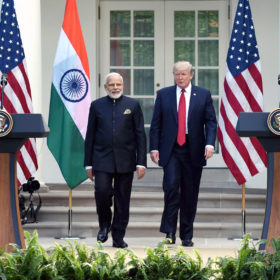
India wins WTO solar dispute against US
A World Trade Organization panel has found a U.S. move to incentivize the use of domestic solar products put imported goods from India and other countries at a disadvantage.

BIPV chance for successful energy transition in European cities
With buildings responsible for 36% of EU greenhouse gas emissions and half the bloc’s energy demand, European cities will have to accelerate deployment of renewable energy and foster substantial investment in energy efficiency to become carbon neutral by 2050. A new report has found ‘solar skins’ are well positioned to help achieve that goal and multiply the contribution of rooftop solar.

Nigeria taps mini-grids to power universities
Four Nigerian universities are in the final stages of abandoning the country’s main grid to be fully powered by mini-grids. Nigeria aims to use more mini-grid technology to power its people by tapping a $550 million World Bank loan.
Talesun pivots Thailand fab towards sanctioned US market with high efficiency retrofit
The Chinese manufacturer has embarked upon an upgrade of 1.5 GW of its module production lines which is set to be completed this year. Previously used to get around trade restrictions applied by the EU, the Thai facility will now produce output for the U.S. market.
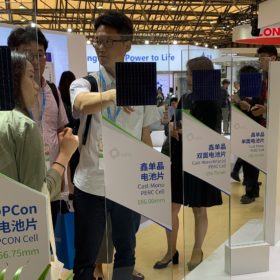
Cell and module prices falling in China
Taiwanese analyst Energytrend saw prices for high power products fall over the past week, but so far only in China. That trend could be replicated around the world next week, however.

New Danish government roadmap displays climate ambition
Joining the growing club of European countries setting carbon neutrality deadlines, new Danish PM Mette Frederiksen has announced her administration will look at reducing greenhouse gas emissions by 70% by 2030.
Singyes shareholders left in the dark
Stockholders in the Guangdong-based business – one the highest profile victims of Beijing’s 5/31 policy about-turn to date – were yesterday due to learn when a crucial vote on a state-sponsored Chinese bail-out of the company will take place. Publication has now been postponed until August.

Germany and Spain to be the solar flag bearers
Traditional power Germany and a rejuvenated Spain will top the chart for new capacity additions as Europe prepares to hit more than 250 GW of new PV by 2024. Small scale systems for self-consumption will play a big role, according to consultants WoodMac.

Saudi Arabia reportedly reduces NREP phase II bidders to around 60 companies
More than 100 domestic developers were interested in the seven-project, 1.515 GW generation capacity second round of the kingdom’s National Renewable Energy Program. That number has been reduced to dozens, according to a briefing note, and a request for proposals is expected within weeks.
