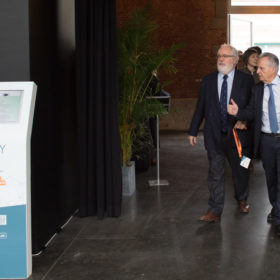
EU call for energy infrastructure proposals backed by €750m of funding
Under its Connecting Europe Facility (CEF), the bloc has opened another call for applications to build cross-border energy infrastructure projects. It has already agreed to provide a grant of €323 million to synchronize the regional grid in the Baltic States.
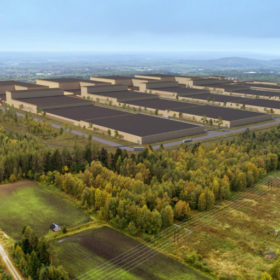
Volkswagen, Northvolt to set up battery research consortium
Automaker Volkswagen and Swedish lithium-ion battery producer Northvolt have announced plans to jointly form and lead a new organization, the European Battery Union (EBU), to conduct research on batteries used in transport and stationary energy storage applications.
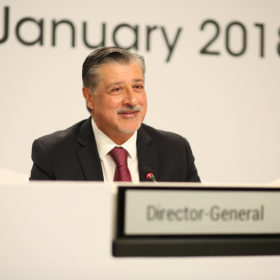
IRENA, GGGI to jointly promote renewables
The International Renewable Energy Agency (IRENA) and the Global Green Growth Institute (GGGI) have agreed to collaborate on the promotion of renewable energy sources such as solar.
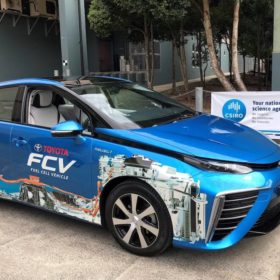
Hydrogen home storage, refueling hub get financial shot into the arm
Toyota Australia will transform its former manufacturing site in West Melbourne into a renewable energy hub to produce green hydrogen with the help of funding from the Australian Renewable Energy Agency (ARENA). In other hydrogen-related news, researchers at UNSW Sydney with partners H2Store have received a $3.5 million investment from Providence Asset Group to develop a hydrogen residential storage.

QMC licences quantum dot, thin film cell technology for Indian manufacture
Indian company Amtronics CC has paid Quantum Materials Corp an initial $500,000 as part of an agreement securing the right to manufacture quantum dots and thin-film quantum dot solar cells based on QMC technology for commercial supply in India. Construction has already started on a manufacturing facility in the state of Assam.
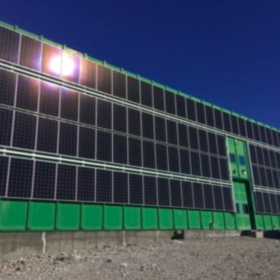
Australia’s first solar farm in Antarctica opens at Casey research station
A 30 kW vertical array has been powered up at Australia’s Casey research station in Antarctica. The project is one the largest solar installations on the ice-covered continent.
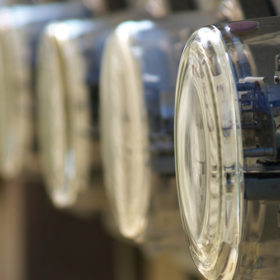
The good, the bad and the strange of net metering policy changes
Maine will restore net metering, Kentucky is gutting it and Arkansas has opened the door to any one of a number of changes, as the foundational policy for distributed solar sees ups and downs across the nation.

Bangladesh to complete 7.4 MW of solar capacity in April
A 7.4 MW solar plant will start generating electricity next month in Rangamati, in Bangladesh’s Chittagong Division.

Shareholders vote through Panda Green debt repayment plan
Stockholders agree to hefty dilution of their shareholding in order to raise funds to pay looming HK$1 billion debt, with state-owned entities including a designated buyout fund due to control up to a third of the new business.
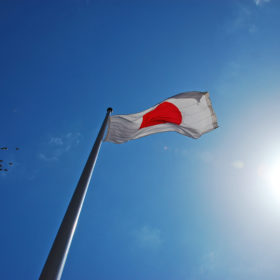
Japan could install 150 GW by 2030 — report
Japan’s cumulative installed PV capacity could reach 150 GW by 2030, from roughly 55.5 GW by the end of 2018, according to a new report by Tokyo based research firm RTS Corp.
