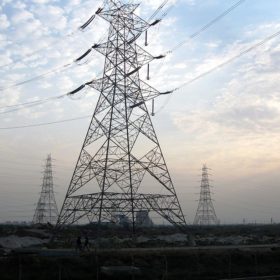
China, US and India drive energy demand up by 70% — IEA
Global electricity demand rose by 4% in 2018, nearly twice as fast as overall energy demand, as consumption edged up by 2.3%, according to a new report by the International Energy Agency (IEA). Renewables accounted for 45% of the growth in generating capacity.

Puerto Rico to officially go 100% renewable
Senate Bill 1121 has been given final approval by the Puerto Rico legislature and is headed to the desk of Governor Ricardo Rosselló. When passed, it will make the island the fifth U.S. state-level jurisdiction to establish a 100% zero-carbon and/or renewable energy mandate.
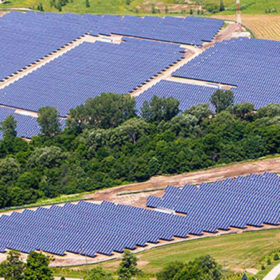
Ontario to source electricity from auctions from 2022
The Independent Electricity System Operator (IESO) in the Canadian province of Ontario has revealed plans to launch annual capacity auctions in a bid to reduce electricity costs for households.
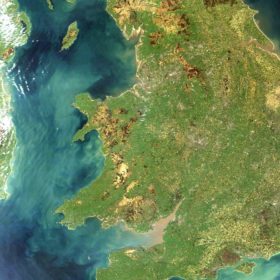
16 MW of UK solar could be ‘ghosted’ over deployment cap
Regulator Ofgem has said that 10 MW of small-scale solar projects have breached the deployment cap, leaving stakeholders uncertain about feed-in tariff payments. A failure to collect FITS could spell disaster for investors, says the U.K.’s Renewable Energy Association.
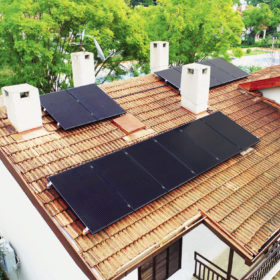
The weekend read: Land of the Crescent Sun
Despite its abundant solar resources, Turkey’s potential for solar energy development remains largely untapped. Although the market grew considerably between 2017 and 2018, the outlook for the next two years, due to the macroeconomic situation and the current regulatory framework, appears rather gloomy. If regulations will not be changed, and tenders for large-scale solar remain unimproved, unsubsidized PV and self-consumption may remain the best options available to seek more growth.
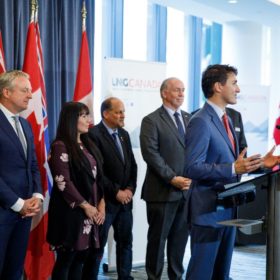
Canada’s new budget plan eyes efficiency, EVs and community energy
The new budget looks to lower the cost of energy for households by turning to distributed energy, energy efficiency and community energy programs. To this end, several billion Canadian dollars will be spent.
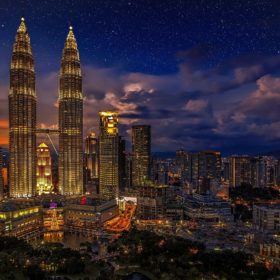
Malaysia mulls P2P energy trading and renewable energy certificates
Giving an update on the country’s renewable energy future, Malaysian Environment Minister Yeo Bee Yin said that the government is looking into P2P energy trading schemes and virtual net metering to expand solar uptake. On the residential side, a recent government-led communications push has lifted installation numbers over the last few months.
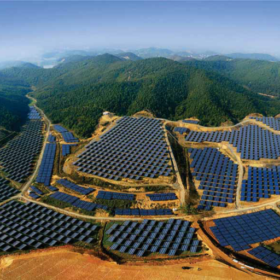
JinkoSolar shipped 11.4 GW of modules in 2018
Chinese module manufacturing giant JinkoSolar today published its financial results for the full year 2018. While the company achieved an impressive 16% growth in shipments over the previous year, its total revenue took a 5.4% hit compared to 2017, thanks to falling module prices throughout the year.
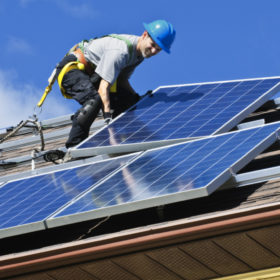
Victoria to require installers to sign CEC’s Code of Conduct for Solar Homes
The Victorian government is giving smaller solar installers eight months to sign up to the Clean Energy Council’s Solar Retailer Code of Conduct if they want to qualify for the Solar Homes program. For larger retailers, the deadline to become Approved Solar Retailers is July.
EU call for energy infrastructure proposals backed by €750m of funding
Under its Connecting Europe Facility (CEF), the bloc has opened another call for applications to build cross-border energy infrastructure projects. It has already agreed to provide a grant of €323 million to synchronize the regional grid in the Baltic States.
