
‘We must build alliances across gender, age, and background’
This week Women in Solar+ Europe gives voice to Judy de Breuil, Business Development & Key Account Manager at Germany’s WeWise Europe. She explains how values such as authenticity and honesty have helped her in her journey in the renewable energy sector and stresses the importance of cooperation in framing leadership and collective succes. “It’s not about creating enemies. It’s about working together,” she states.

Romania opens €310 million investment call for self-consumption installations
The €310 million ($351 million) funding package includes over €268 million ringfenced for solar installations for self-consumption. The deadline for companies to submit applications is August 21.
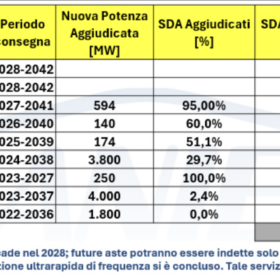
Utility-scale batteries show exponential growth in Italy
The development of bigger battery energy storage systems (BESS) is booming in Italy, but deployment of residential and commercial and industrial (C&I) equipment fell in 2024.

Angola breaks ground on 35 MW solar project
Billed as the country’s largest privately-owned solar power plant to date, the 35 MW array is expected to begin operating in the first half of next year, with potential to add a further 45 MW during a second development phase.

Hydro-Quebec shares 300 MW solar tender details
Hydro-Quebec has launched a 300 MW solar tender. Interested applicants have until July 21 to register to the tender and will be given until March 31, 2026 to submit their bid.

SolarPower Europe calls for tough cyber rules following Danish import probe
The recent discovery of unexplained components in Danish energy equipment highlights the urgent need for stronger EU solar cybersecurity rules, according to SolarPower Europe.

Propagation of lithium-ion fires is the real threat
Live fire tests aim to demonstrate physical containment technology.
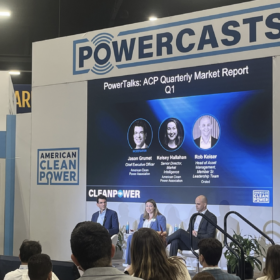
Key takeaways from CleanPower 2025
More than 8,000 people attended the recent CleanPower 2025 clean energy event held by the American Clean Power Association (ACP) in Phoenix, Arizona.

Controversial rooftop solar bill glides through California’s Appropriations Committee
The California State Assembly’s Appropriations Committee passed a bill that would renege more than a million commitments to the state’s rooftop solar customers.
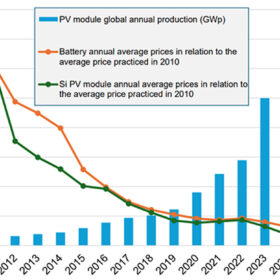
Falling Li-ion battery prices mirror solar photovoltaics trends: Is there a role for second-life batteries before recycling?
Lithium-ion batteries are everywhere, powering everything from consumer electronics to electric vehicles, residential PV storage systems, and, more recently, mitigating curtailment in large-scale wind and solar power plants. EVs are driving large-scale demand for Li-ion batteries which will result in substantial volumes of spent batteries in the near future. This scenario highlights the potential for repurposing EV batteries for second-life stationary applications, which could maximise their value before recycling. However, to fully realise this opportunity, several economic, technical, and regulatory challenges must be addressed and resolved.
