Indonesian think tank says nation at crossroads with energy transition
The Jakarta-based Institute for Essential Services Reform (IESR) says 2025 will be a pivotal year for Indonesia’s energy transition, as the nation has fallen behind targets in recent years. It seeks to shift fossil fuel subsidies to renewables and is urging the government to implement a clear, measurable plan for the upcoming national energy policy.

‘Equity requires addressing structural barriers in hiring and promotions’
This week, Women in Solar Europe gives voice to Eyerusalem Mekuria Wondemu, Project Engineer at Switzerland’s Gruner Stucky SA. She says changes in career paths are slow due to entrenched cultural norms and unconscious prejudices, but growing advocacy and representation drive progress. “Mentorship, continuous learning, and networking are critical,” she states.

EU Battery Regulation is coming
Manufacturers and suppliers of batteries for photovoltaic energy storage must meet more extensive requirements under the new EU battery regulation. Many companies are still unsure what this means for their product design, processes, and management systems. Yalcin Ölmez, head of the operational and investment risks department at German testing body TÜV SÜD, explains what companies now need to consider.
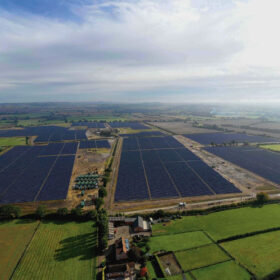
UK planning reform targets solar development dead zone
UK government to increase solar capacity threshold for nationally significant infrastructure projects, handing local planners consent power for projects up to 100 MW. Projects with capacity greater than 50 MW in England are currently subject to approval from central government.

Czech parliament backs plan to retroactively cut solar feed-in-tariffs
The Czech lower house of parliament has approved plans to retroactively cut feed-in-tariffs (FIT) for solar projects built between 2009 and 2010. The local solar sector has continued to criticize the planned law changes, which still need approval from the upper house.
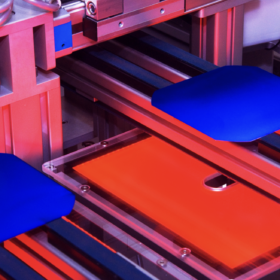
US doubles solar polysilicon and wafer tariffs on China
The US government has doubled Section 301 tariffs on imported solar polysilicon and wafers from China to 50%. The materials are vital for manufacturing solar panels, from refining polysilicon to assembling modules.
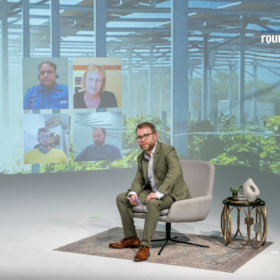
pv magazine Roundtables Europe: EU guidance for PV confirmed in agrivoltaics session
The European Commission will publish guidance on agrivoltaics as part of a wider document covering innovative technologies, attendees at pv magazine Roundtables Europe 2024 heard. More than 1,300 guests joined pv magazine’s live event on Dec. 5, which covered topics ranging from quality and European manufacturing to energy storage and solar cell technology.
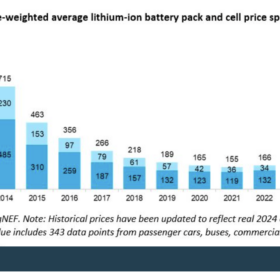
BNEF: Lithium-ion battery pack prices drop to record low of $115/kWh
Battery prices continue to tumble on the back of lower metal costs and increased scale, squeezing margins for manufacturers. Further price declines are expected over the next decade.
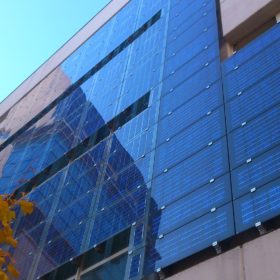
Five-year testing show PV façades perform better than expected
Researchers in the Netherlands have analyzed the performance of PV façades during the period 2018-2023 and have found that these system may generate more economic value than conventional rooftop PV systems. Their analysis was based on financial, technical and environmental metrics

Why battery energy storage is essential for Germany’s solar targets
While Germany’s battery energy storage sector is booming, developers should be aware of the various hurdles to overcome and could learn lessons from the United Kingdom battery market.
