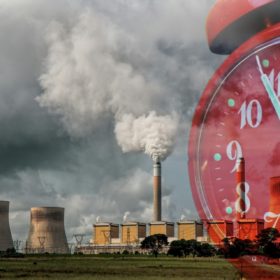
Is Eskom turning to solar?
The South African utility has issued a 20-strong tender for 50 kW solar inverters and mounting structures, to be used in four power plants. Although it is unclear whether the tender marks the energy company’s first step into solar energy, the procurement follows the recent publication of South Africa’s Integrated Resource Plan. Eskom is reportedly developing a renewables-linked large scale storage project which may explain the need for inverters.

Indian fossil fuel giant NTPC tenders 1 GW of solar capacity
Developers have until November 18 to submit bids for projects anywhere in India. The projects are to be set up on a develop, build, demonstrate and transfer basis.
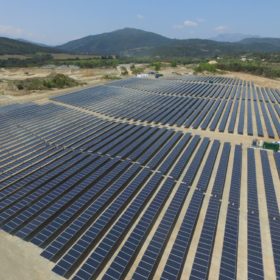
Corsica hosts 5 MW/7.5 MWh solar plant with Tesla batteries
The project is in Giuncaggio, in the northeastern part of the French island, and was built with Tesla Powerpack batteries, a Nidec power management system and a new power management device from the project’s developer Corsica Sole.

India prepares to embrace agrivoltaics
Take-up has been slow considering the nation’s mammoth agricultural industry but, as a packed session on the topic at the recent Renewable Energy India show illustrated, attitudes may be changing in a nation which is already installing solar greenhouses.

Deal signed for 110 MW Netherlands solar park
An estimated output of 104 GWh of clean energy per year from the second half of 2020 is not the only benefit the Vlagtwedde Solar Farm will bring. There will also be an awful lot of blueberries.

A common language for bifacial PV
This week pv magazine was in Amsterdam for the sixth edition of the BifiPV workshop, where the discussion focused on the impressive achievements made by bifacial solar modules and the challenges the technology faces as it moves toward mainstream adoption.
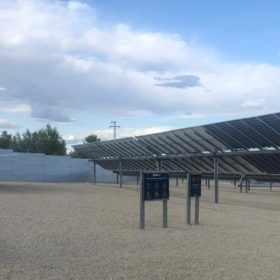
Interview: PV Hardware chief operating officer Rodriguez talks heat dust and wind
Emilio J Garcia Rodriguez, from tracker manufacturer PV Hardware, spoke to pv magazine about the company’s activity in the Middle East and North Africa market. Dust, heat and heavy storms complicate the installation and operation of trackers.

Japan’s largest floating PV plant catches fire after Typhoon Faxai impact
Kyocera’s 13.7 MW floating project at the Yamakura Dam was damaged by 120mph winds the typhoon brought to the coastal city of Chiba. Firefighters said the blaze may have been generated by the strong heat produced by panels stacking up.
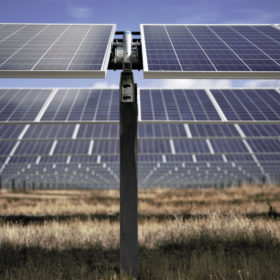
IHS Markit: Trackers to account for a third of PV installations
New analysis predicts more than 150 GW of tracker capacity will be installed in the next five years – around a third of all ground mount projects up to 2024. Rapid growth in Europe, the Middle East and Africa; and the better cost structures possible from combining trackers and bifacial modules are singled out as key trends.
Webinar Q&A: Simulating the gains of bifacial and tracking installations, where’s the rub?
Following up on the webinar held with Trina Solar about the new algorithms needed for bifacial and tracking installations, the word is that gains of 20-30% are not unlikely. To attain that, however, the sweet spot of front and rear side yield has to be reached. Trina has showcased a new algorithm alongside its bifacial n-type modules and claims it can do just that.
