
The prospects for solar in a 1.5C world
We will need 10.7 TW of clean energy generation capacity this decade to stay on track with the most ambitious of the climate change paths agreed in Paris, which would include plenty of solar investment and jobs, according to the International Renewable Energy Agency.
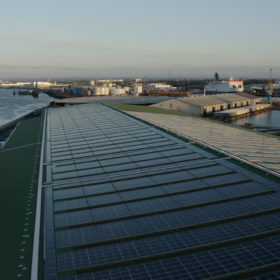
China set to mandate solar on at least 20% of residential roofs in pilot counties
State body the NEA has given its provincial offices until July 15th to suggest counties where a solar mandate – which rises to at least half of all government roofspace – can be rolled out. Selected companies will be awarded whole-county contracts.
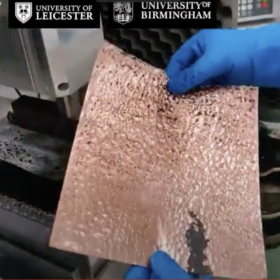
From toothbrushes to saving the planet: How ultrasonic delamination could hold the key to battery recycling
The use of ultrasonic sound waves has been applied to battery recovery. Researchers from the ReLiB project at the U.K.’s Faraday Institution say the process has already proven to be 100 times faster than conventional approaches. It is also much more sustainable and less energy intensive.
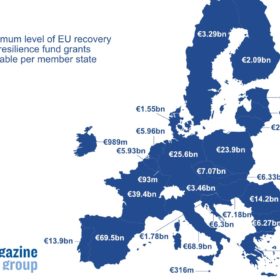
EU raises another €15bn for Covid-recovery effort
The bloc’s latest two bonds were oversubscribed more than 11 times yesterday as the European Commission announced the results of a second fundraising round which already puts the EU almost halfway to the €80 billion it intends to generate through such instruments this year.

Roundtables Europe Video: Solar opportunities in hydrogen, battery storage, and electromobility
Innovations in green hydrogen are developing at a fast pace. This presents new questions like where are the markets, how fast will they come, how can we ensure hydrogen is green and cost-efficient, and what needs to be considered by project developers when planning related business models? And, at the end, will there be an opportunity for market players coming from the solar sphere? Watch our final Roundtable Europe video to find out.
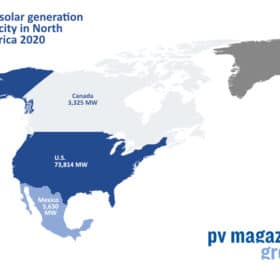
Electrification could drive 51 GW of solar in Canada by 2050
And that figure is based on a less ambitious climate change policy than the one Ottawa has committed to since the North American Renewable Integration Study started, in 2018.
New renewables cheaper than legacy coal or gas for almost half the world’s population
Electricity bill payers in nations as diverse as Germany, Greece, India and China should be aware new solar projects can now generate electricity cheaper for them than legacy coal and gas-fired plants.
East African renewables developers and investors need matchmaking
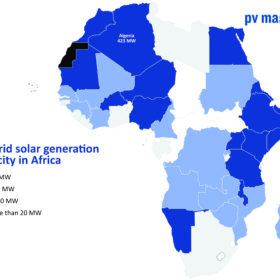
Lack of grid capacity and renewable energy institutions are a common lament in sub-Saharan Africa but there is no lack of cash to invest, nor eligible projects in East Africa, as a recent event heard; the problem lies in marrying the two.
‘Low-cost renewable hydrogen may already be in reach’
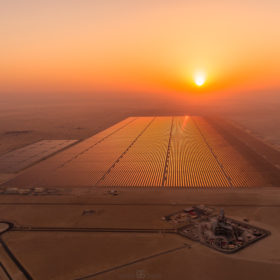
If the three record-busting low solar price tariffs recorded in the Middle East in the past 18 months are to be believed, renewables-powered hydrogen in prime sites in the region could already compete with gas-plus-CCS production, according to IRENA. Has the Gulf discovered the new petrol?

Roundtables Europe video: Sustainability & Made in Europe PV
As Europe’s PV market scales, the security of module supply and other equipment, the sustainability of products and processes, and the equity for citizens and workers grows in importance. Given these dynamics, pv magazine’s Roundtables Europe Sustainability and Made in Europe session explored European PV production, from polysilicon through to cells and modules. The discussion included how a competitive European production industry can be built, with a focus on political, financial, and technological issues. If you missed the session, check out the video, out now.
