
Green bonds lead sustainable funding past $1tn mark
In the past 12 years, green bonds have raised nearly $800 billion for investment in clean energy and other sustainability projects and companies are now pegging bond interest payments to their environmental performance.

Australian agrivoltaics start-up aiming for eventual 1 GW of solar capacity
With sun the common component of solar energy production and agriculture, a new company in northern New South Wales is set to combine the benefits of sowing PV and forage crops in the same soil.
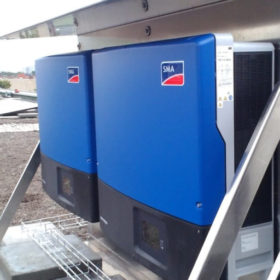
SMA: Sustainability and profitability are not mutually exclusive
In the run up to our Greenwashing vs. verifiable sustainability webinar, the CEO of pv magazine’s UP initiative partner SMA Solar Technology, Jürgen Reinert, talks about what the inverter manufacturer is doing to prove its sustainability credentials.
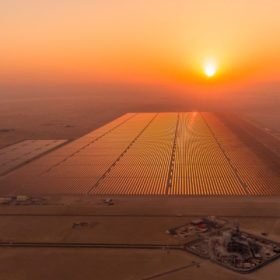
Only with hydrogen can we save the climate
There is no alternative to using hydrogen for climate protection. Climate change and its ensuing measures require a lot of effort, money, and above all the right solutions. Therefore, a meaningful project, which will be perceived worldwide as a model for complete technological change, is key. That is what the Bonn Climate Project and the CTC Bonn stand for! We can already see great steps towards a hydrogen economy being taken in Germany. Steps are good, but not enough; we need the implementation of a hydrogen economy now!
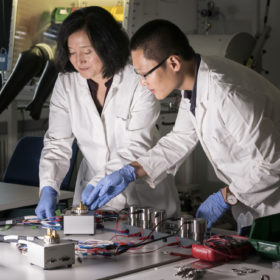
Calcium batteries cool down with new electrolyte
Scientists at Germany’s Karlsruhe Institute of Technology have developed a new class of electrolytes they say could bring calcium batteries – currently only a lab technology – a step closer to being a practical reality for energy storage.
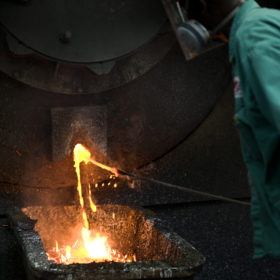
Do lead batteries have a role in the clean energy transition?
The Consortium for Battery Innovation has outlined research goals for advanced lead-based battery concepts, claiming the potential of the technology is “nowhere near fully exploited”. The group, comprised of lead-battery industry stakeholders, says such devices can play an important role alongside lithium-ion and other storage technologies in electric vehicles, renewable energy storage and other applications.

Solar helping UK clean up legacy of coal industry
The governmental body responsible for keeping mine pollution out of waterways has announced completion of the first phase of a plan to use solar to keep down its electricity bills.
US corporate clean energy procurement platform opens in Europe
LevelTen claims its online platform offers small companies the chance to band together to buy green energy and connects renewable energy producers and consumers in such an effective manner it has already driven $1 billion of green energy supply in its homeland.

Solar-plus-storage to provide all the daytime electric needs of nation state
A 6 MW solar plant and 5 MW/2.5 MWh storage system are set to increase the share of renewable electricity on the Pacific island of Nauru from 3% to 47%. The $27 million project is being supported by the Asian Development Bank (ADB).

India prepares to embrace agrivoltaics
Take-up has been slow considering the nation’s mammoth agricultural industry but, as a packed session on the topic at the recent Renewable Energy India show illustrated, attitudes may be changing in a nation which is already installing solar greenhouses.
