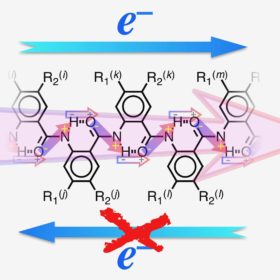
University of California gives electrons a one-way ticket
A new study from University of California, Riverside, uses electric dipoles to accelerate electron in one direction, whilst completely stopping it in the other. The discovery, according to researchers, could lead to improvements in solar cell and other energy conversion technologies.

Spain’s ‘sun tax’ set to be scrapped
With her first official announcement, Spain’s incoming Minister of Ecological Transition, Teresa Ribera has made it clear that the previous government’s reviled tax on distributed generation array, the so-called ‘sun tax’ will be eliminated. At the same time, she has confirmed her support for more ambitious EU renewable energy targets.

Eon secures €5 billion to finance innogy acquisition
Eon has now secured funding required the acquisition of RWE’s renewable energy subsidiary innogy, a move that was announced in March. German regulators, and the companies’ respective boards, have not yet give the green light for the acquisition.
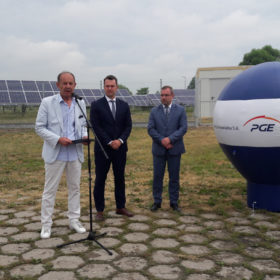
Polish utility PGE takes another step into solar
The utility’s renewable energy unit PGE EO has announced the construction of a PV laboratory and a solar module field test in Siedlce. The move is part of its plan to invest in solar parks up to 1 MW under Poland’s auction mechanism.
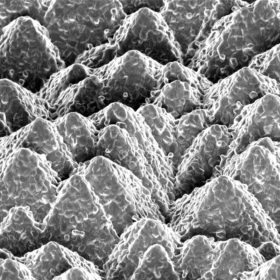
EPFL produces 25.2% silicon-perovskite tandem, ‘cost competitive’ production claimed
Crystalline silicon tandem cell structures show great promise in delivering efficiencies beyond the limits of conventional c-Si. Swiss researchers claim to have gone beyond 25% with a c-Si-perovskite tandem cell structure, using what they claim is a competitive production process.
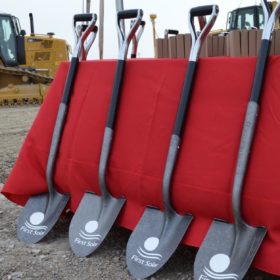
First Solar breaks ground on 1.2 GW factory in the US
The plant is the second-largest planned in the Western Hemisphere, and will triple the thin film module maker’s manufacturing capacity in the United States.
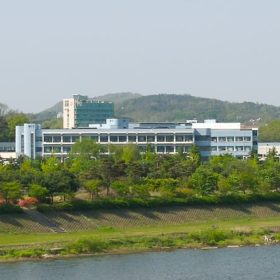
Korean researchers propose new material for stable, lead free perovskite
A team of scientists from the Korea Advanced Institute of Science and Technology (KAIST) has proposed a gold-based halide perovskite as a material for high efficiency solar cells, which it says could be both more stable and more environmentally friendly to produce than many existing perovskites which scientists are investigating to boost solar efficiency.

Canada Pension Plan Investment Board world’s first to issue Green Bonds
Canada’s pension fund is the world’s first to establish a Green Bond. The growing acceptance for renewable energy assets from sovereign wealth funds indicates a solid and healthy business climate for renewable energy, and could have positive effects for the industry in the future.

Italy and Spain join group of countries supporting 2030 binding renewable energy target of 35%
According to the EU Commissioner for Energy and Climate Action, Arias Cañete, negotiations among all EU members on final target are still ongoing, and face several issues.
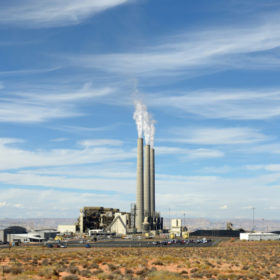
Lowest public solar power contract in the United States: 2.49¢/kWh
Arizona’s largest power user has approved a 20-year power contract with a 30 MW solar project at 2.49¢/kWh, the lowest price for a public solar power contract to date. The deal also involves shutting down a coal plant.
