
French IT services provider develops cybersecurity box for PV plants
France-based IT services provider Cyllene has developed the RC-DC4/5G “Cyllene Box,” a network device for PV power plants that manages multiple internet connections, encrypts data, and supports compliance with the European Union Network and Information Security Directive (NIS 2).
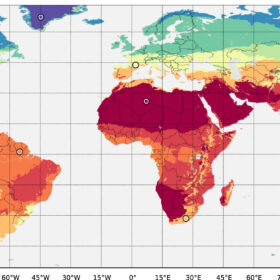
EU Joint Research Centre proposes novel PV climatic classification
A research group from the European Commission Joint Research Centre has developed a new PV climatic classification, the first to address annual yield and performance ratio. Their work resulted in 10 globally applicable clusters. “It challenges the assumption that many more classes are needed to capture PV-relevant climate,” the researchers said.

The eyes and ears of the power grid
Sensors are an indispensable tool to inform utility managers of the state of the electricity grid and the occurrence of disruptions of any kind. The IEC provides the standards and conformity assessment that enable them to operate safely and efficiently.
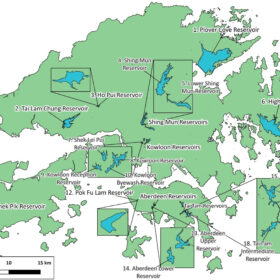
Floating PV could power up to 490,000 households in Hong Kong
Hong Kong has limited land, and researchers have checked how much of the city can be powered if most of its water reservoirs were to be fully or partially covered with floating PV systems. At best, full coverage can supply more than 15% of the city’s total demand, and more than 60% of the residential demand.
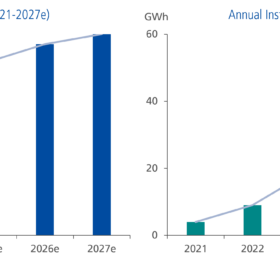
Global solar enters period of adjustment, as market conditions redefine rules of competition
Global solar growth is flattening in major markets as oversupply from China and India drives prices down and shifts competition from sheer volume to execution, policy alignment, and system integration. Across the U.S., Europe, and China, energy storage is becoming essential for project viability, making PV-plus-storage and strong EPC partnerships the new basis for winning projects in 2026 and beyond.
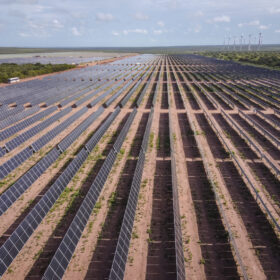
Capex-driven strategies can reduce solar LCOE by 20%
An international research group has conducted a literature review of capital expenditure-driven levelized cost of electricity optimization strategies for utility-scale PV systems. Tracking optimization, system voltage escalation, and advanced system design are identified as the most promising cost reduction areas. “The next wave of PV research must be LCOE-native, system-level, and deployment-validated,” a member of the research group said.
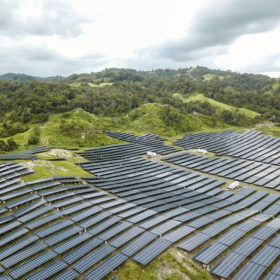
Grid code standards key to unlock Indonesia’s solar potential
New research shows how modern technical standards, combined with broader regulatory and grid reforms, are essential to ensure system reliability in the Indonesian electricity system as renewable capacity grows.
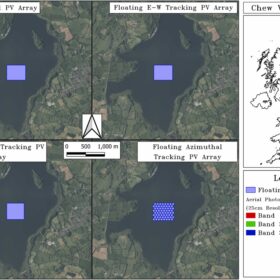
UK study finds azimuthal trackers boost floating PV performance
A University of Exeter team has tested single-axis tracking systems for floating solar across 12 UK sites, finding azimuthal tracking delivers the largest energy gains and lowest levelized cost of energy (LCOE).
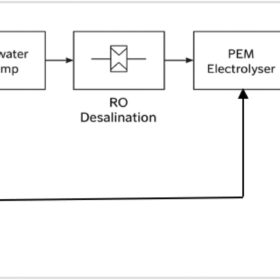
Off-grid floating PV-desalination system for hydrogen production
Scientists have simulated a solar-powered hydrogen production system comprising 32,050 photovoltaic panels, a pumping system, a seawater reverse-osmosis desalination unit, an electrolyzer, and a hydrogen storage tank. Operation of the system in Oman could potentially yield a levelized cost of electricity of $0.05/kWh and a levelized cost of hydrogen of $9.5/kg.
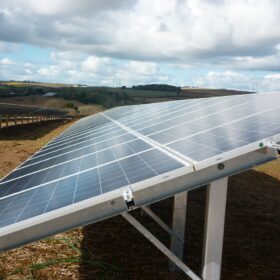
Slovak researchers predict PV inverter output without weather sensors
Researchers in Slovakia have demonstrated a machine-learning framework that predicts PV inverter output and detects anomalies using only electrical and temporal data, achieving 100% accuracy in classifying inverter output states under static operating conditions at a solar installation.
