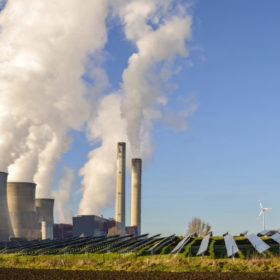
Indian power company chief calls for AI to help ‘clean’ coal for at least 30 years
An energy conference in West Bengal heard of a proposed 800 MW solar project in the state on top of a 900 MW scheme being carried out with Japan. But the chairman of power giant NTPC said artificial intelligence and digitization should be used to extend coal burning for decades.

The Chinese solar market is changing shape
Two reports have described how the world’s largest renewable energy market is moving towards maturity. According to the Brookings Institution, the Chinese clean energy market could become more open to Western investors and tech. A report by Fitch claims projects are moving back to inland provinces from coastal regions.

Commercial solar at grid parity in China but a hard line is needed on soft costs
Deploying commercial and industrial PV in China without subsidy is already profitable in some areas, according to a new study, but prohibitive soft costs and cheap electricity are the main barriers for such installations in areas where grid parity remains out of reach.

The tide is changing for ground-mounted PV in Ireland
Ireland appears ready to embrace PV after years of failed announcements. Globaldata predicts the EU member state will deploy around 1.3 GW of solar by 2030, with renewables potentially meeting 65% of electricity demand. Furthermore, Irish Water has announced it wants to deploy solar at its water treatment plants.
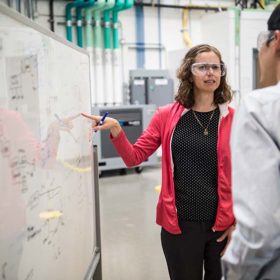
Stitching together the grid of the future
A vision of a decentralized, renewable-powered electricity grid is being brought a step closer by scientists at the U.S. National Renewable Energy Laboratory. Their project, Autonomous Energy Grids, aims to take an overarching look at the solutions that will power this grid of the future, and to fill any gaps that appear between them.
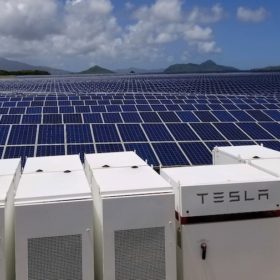
Using machine learning and cheap satellite data to design rooftop solar power
Researchers have built a tool to use cheap satellite imagery – like Google Maps – to automatically create solar designs with a 91% accuracy rate.
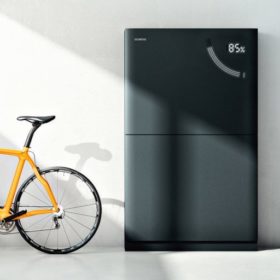
Residential storage in Europe to grow 500% by 2024
A new report from analysts at Wood Mackenzie forecasts 6.6 GWh of residential energy storage to be installed across Europe by 2024. The economics of the technology are at a tipping point, increasingly reaching grid parity in European markets. With rising electricity demand and falling battery system costs, the trend will further spread across the continent and fuel an uptick in demand.
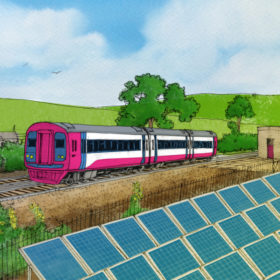
Don’t have a node for your solar plant? Connect it to the railway!
Railway operators can now feasibly connect solar plants to traction substations, claims a consortium that is now working on a similar demonstration project in the U.K. Almost all of the 30 kW installation’s output will be used to move trains, but in the future storage could come into the picture for larger “railway-connected” solar power projects, says 10:10, the U.K.-based climate change charity that developed the pilot.
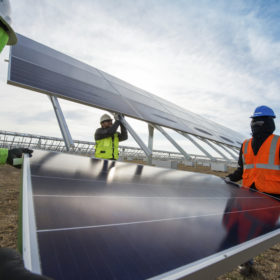
SunPower’s slow climb towards the black
The high efficiency solar panel maker pulled off a rare profit in the second quarter due to selling off leases, but expects to report another quarterly loss in its next update.
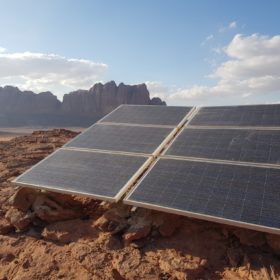
Orange Jordan adds 37 MW of solar under ‘wheeling’ scheme
With grid capacity a limiting factor, the Middle Eastern country has moved to foster private-to-private solar projects to meet industrial power demand.
