Residential storage in Europe to grow 500% by 2024

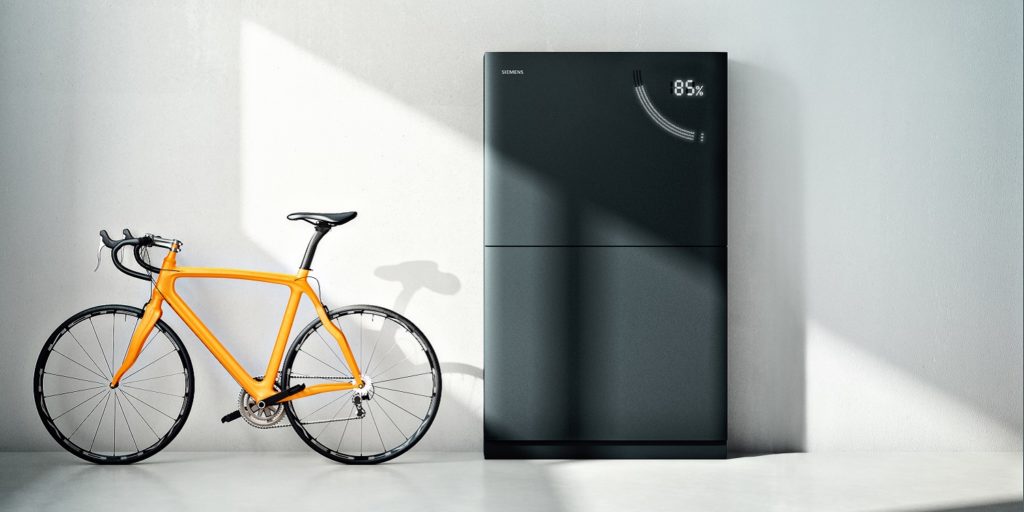
The European residential storage market is on track for a five-fold increase in capacity over the next five years. A confluence of rising electricity prices due to pending infrastructure updates and increasing electrification of various sectors, as well as a continued reduction in system prices for energy storage, are likely to enable 6.6 GWh of residential storage to be added by 2024.
A team of analysts at Wood Mackenzie came to this conclusion in the outfit’s latest report, Europe Residential Energy Storage Outlook 2019. Thereby Europe is already the world’s most active market for residential storage products, with Germany leading the pack. Thanks to anticipated diversification of the market, the region’s installation volumes are expected to double to 0.5 GW/ 1.2 GWh by 2024.
“Off the back of Germany’s success, residential storage is beginning to proliferate in other European countries, particularly where market structures, prevailing power prices and disappearing feed-in tariffs create a favorable early-stage deployment landscape,” explained Rory McCarthy, Wood Mackenzie senior research analyst.
According to McCarthy, the economics will play out in favor of storage. Wood Mackenzie asserts that in Germany, Italy and Spain, the market is moving towards grid parity for solar-plus-storage in the residential segment. That is achieved when the costs per kilowatt-hour of power from the grid are the same as for the solar-plus-storage system.
“Our modeling shows positive economics – net present values (NPVs) and internal rates of return (IRRs) – in Italy by 2021 and Germany by 2022. added McCarthy. “Although these two countries have embraced residential storage more than others, we expect this trend to diffuse through Europe – moving the proposition from an emotive purchase to a sound investment decision. Although positive NPVs are not essential for market growth, evidenced by strong growth in Germany and Italy to date, they assist with mass adoption and market uptick.”
Upfront investment remains a strong financial barrier. “There is a hefty premium for adding storage to a solar installation – 93% in our Germany 2019 base case,” McCarthy suggests. To offset this, he claims that more innovative business solutions could ease up customer propositions. “Electricity price increases, along with consumers’ desire to live in a more environmentally sustainable household, may be enough to drive the residential business case across the line.”
Still, the team highlights that with uptake in electric mobility and rising demand for electricity resulting from the electrification of more and more industrial sectors, electricity prices are likely to surge. This is accompanied by the need for infrastructure updates, which would further drive prices upward. These developments will continue to play out in favor of residential storage.
The Spanish market could likely recover from its infamous solar tax. Spain’s government had introduced a tax on self-consumption, alongside other measures that have hit the otherwise sunny region’s solar market hard. Equipped with a new government and nudging safeguards from the European Commission, the Spanish market has returned to former glory over the past year. While the effects of the policy shift are already visible in the utility-scale segment – Spain will likely become Europe’s largest market in 2019 – and this trajectory will be followed by the residential market, the analysts believe.
On a more sobering note, the team points out that grid parity for such systems often hinges on supportive policy frameworks. In the U.K. and France, the analysts do not expect grid parity to set in during the reporting period until 2024. The team adds, however, that in both markets they expect current deployment levels to continue irrespective of this unfavorable development.
In a similar market scenario, Japan’s residential storage market is ready for take-off, and CATL’s recent entry to the market is indicative of global players interest in tapping these early mover solar markets. Around half a million households began installing solar systems in 2009 to receive a ten-year feed-in tariff set at JPY 48/kWh ($0.44). With the first of those FIT payment agreements expiring this year, demand is rising for residential energy storage solutions.
Although Japan’s leading utility has pledged to keep paying for excess solar power generated by household systems, the JPY 10/kWh on offer is well below the average electricity price of JPY 23.35/kWh recorded by the Japanese Agency for Natural Resources and Energy between 2011 and 2016. Germany and Italy are set to head down the same route in a few years.
This content is protected by copyright and may not be reused. If you want to cooperate with us and would like to reuse some of our content, please contact: [email protected].

Please login to comment

[…] automotive and solar+storage customers may experience delays in the supply of battery cells from China, which hosts more than […]
[…] and growth continued in 2019 as well. For Europe, analysts believe a doubling of installations, to 1.2 GWh per year, will have taken place by 2024.In Germany, with the highest electricity prices in Europe, […]
[…] trend of residential storage is now a global one. Europe’s home battery installations are forecast to increase five-fold, with as much as 6.6 GWh by […]
[…] trend of residential storage is now a global one. Europe’s home battery installations are forecast to increase five-fold, with as much as 6.6 GWh by […]
[…] in particular, will be a fast-growing market. A recent report by Wood Mackenzie forecast a five-fold increase in residential storage in the next five years. This […]
[…] in particular, will be a fast-growing market. A recent report by Wood Mackenzie forecast a five-fold increase in residential storage in the next five years. This […]
[…] in particular, will be a fast-growing market. A recent report by Wood Mackenzie forecast a five-fold increase in residential storage in the next five years. This […]
[…] Read full article on PV Magazine. […]
[…] Read more: PV Magazine […]
[…] This recent decrease in batteries costs has turned the attention of some European countries to solar powered homes coupled with battery storage systems, with Germany as the main enabler. By the end of 2019, there were about 206,000 energy storage systems in homes throughout Germany, with an increase of 44% over the previous year. Today, every other order for rooftop solar panels in Germany is sold with a battery storage system. The economics of battery storage are not the only motivation of most battery system homeowners. They also aim at becoming independent from power companies and their rising prices while reducing their carbon footprint. A new report from analysts at Wood Mackenzie forecasts 6.6 GWh of residential energy storage to be i…. […]