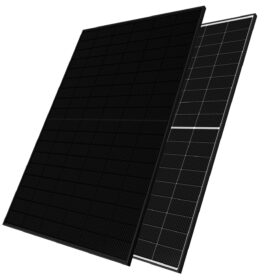
Sharp unveils new TOPCon solar modules
The Japanese electronics manufacturer has launched the NU-JC440 and NU-JC430B panels with efficiencies of 22.53% and 22.02%, respectively. Both products are IEC/EN61215 and IEC/EN61730-certified and rely on M10 wafers.
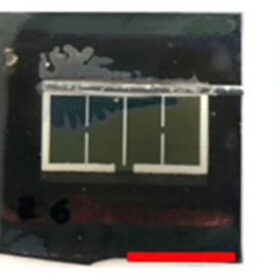
Strategies to address thermomechanical instability of perovskite solar modules
A U.S. research team has investigated the thermomechanical reliability of metal halide perovskite (MHP) modules and cells in an effort to identify the best strategies to improve their stability under thermomechanical stressors. The scientists discussed, in particular, film stresses, adhesion of charge transport layers, and instability under light and heat.
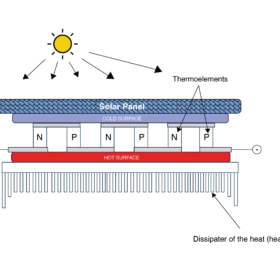
Scientists claim PV systems combined with thermoelectric cooling may achieve 6-year payback time
Scientists in South Africa have modeled a photovoltaic system connected to a thermoelectric cooling device and have found it may produce around 9.2% more electricity than conventional PV system without cooling. The research team claims the proposed system guarantees a minimum cost saving of 10.56%.
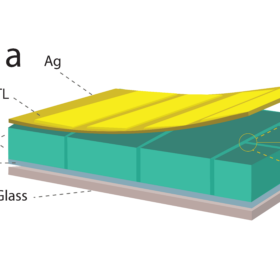
Perovskite solar cell based on self-disintegrating seeds achieves 23.73% efficiency, 83.64% fill factor
A Chinese research group including scientists from module maker Tongwei has designed a perovskite solar cell with remarkable perovskite film quality through the so-called self-disintegrating seed strategy. The device not only achieved one of the highest fill factor values ever recorded for perovskite solar to date, but also showed remarkable stability.
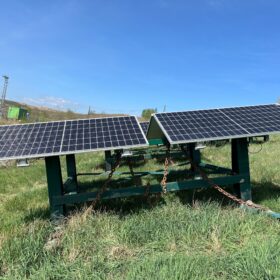
Czech utility unveils tech to secure solar panels in unstable subsoil
CEZ Group has developed a new solution for securing solar photovoltaics in areas of unstable subsoil from the central section of conveyor belts previously used in strip coal mines. Several pilots of the steel structure have already been deployed on a reclaimed area near the Bílina Mine in northern Czechia.
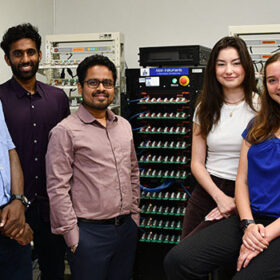
Bringing lithium-sulfur batteries closer to commercialization
Researchers at the University of South Carolina have successfully transitioned their highly-durable lithium-sulfur battery technology from coin to pouch cells and reported competent energy densities.
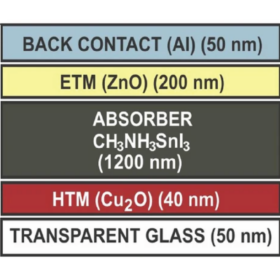
Lead-free inverted perovskite solar cells without transparent conducting oxides may achieve 30% efficiency
Researchers in Nigeria have proposed to build inverted perovskite solar cells exclusively with all-inorganic transport materials and a lead-free perovksite absorber. Through a series of simulations, they showed these device may achieve efficiencies over 30% with low production costs.
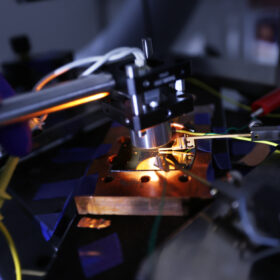
U.S. scientists develop air-bridge thermophotovoltaic cells with 44% efficiency
U.S. scientists have developed a thermophotovoltaic cell that could be paired with inexpensive thermal storage to provide power on demand. The indium gallium arsenide (InGaAs) thermophotovoltaic cell absorbs most of the in-band radiation to generate electricity, while serving as a nearly perfect mirror.
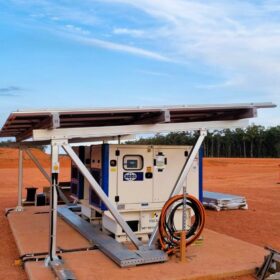
Car park solar roofing system for off-grid solution
The versatility of solar mounting manufacturer and balance-of-system provider Clenergy’s ezShade 2.0 solar shade system has been put to the test with the solution at the core of a standalone power system fuelling an off-grid communications site in remote northern Queensland.
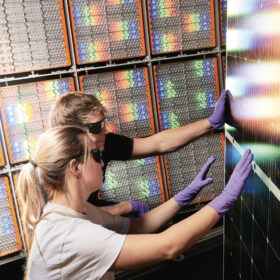
Shedding light on tandem perovskite solar cell progress
Perovskite PV devices are set to become the next big thing in solar with market analysts at S&P Global Commodity Insights predicting 1 GW of production by the end of 2024, rising to 6 GW in 2025. Perovskite tandem devices are at the front of the queue for commercialization but their characterization presents technical challenges.
