
Carbon-based perovskite solar cell without hole transport layer achieves 14.15% efficiency
Researchers in China have outlined a new surface engineering strategy to build low-cost solar cells without a hole transport layer. The devices were treated with benzoylcholine halide to reduce non-radiation recombination and achieved remarkable efficiency and stability.
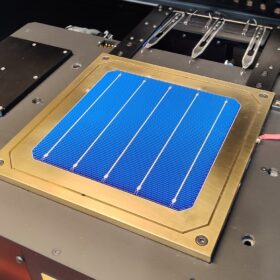
Chinese Academy of Sciences presents new way to assess HJT solar modules
Researchers in China have developed a model to predict lifetimes of heterojunction (HJT) modules made with ultraviolet cut-off polyolefin elastomer (POE) encapsulant. The approach considers factors such as temperature, humidity and UV irradiation.

All-perovskite tandem PV cell based on carboranes hits 27.2% efficiency
Researchers have developed a thermal regulation strategy to improve the performance of inverted tin-lead perovskite tech for all-perovskite tandem solar cells. It has an efficiency of 23.4% and contributed to a 27.2% efficiency in a tandem cell while ensuring stability.

IEA-PVPS launches action group on agrivoltaics
IEA PVPS is about to start a new format for expert engagement: an Action Group on Agrovoltaics; a collaborative effort to harness the synergy between agriculture and solar energy generation. Through international cooperation and interdisciplinary engagement, the group aims to unlock the potential of agrivoltaics, optimizing land use efficiency, enhancing agricultural resilience to climate change, and fostering social consensus towards solar energy development.

ETH Zurich unveils new tech to produce heat with solar
Swiss researchers have engineered a device that uses solar energy to heat to more than 1,000 C. The technology could make it possible to use solar energy to decarbonize energy-intensive industries that require high temperatures for production processes.

New dates, rules for 2025 Bridgestone World Solar Challenge
The Bridgestone World Solar Challenge has announced a new set of dates for for the 2025 edition of its unique 3,000 km solar car race across the Australian continent, along with some regulation changes.
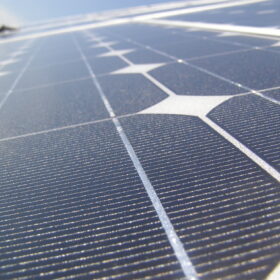
Novel hydrophobic, antireflective coating for solar glass
Slovakian scientists have developed a novel hydrophobic, antireflective coating for solar glass with a silica-titania thin film as the bottom layer and an inorganic-organic upper layer made of silica modified with triethoxy(octyl)silane. This new coating increases glass transmittance by 7% compared to uncoated glass.
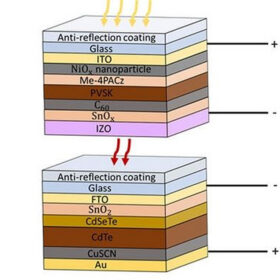
U.S. scientists demonstrate 25%-efficient perovskite-cadmium tandem solar cell
The researchers say the cell has a top perovskite cell with a transparent back contact made of indium zinc oxide and a commercially established cadmium telluride bottom device. They claim the champion tandem cell has the potential to reach a 30% efficiency.
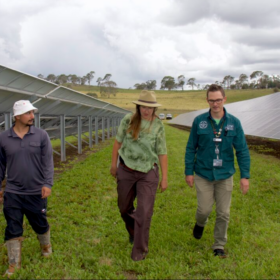
New guide to improve biodiversity of PV projects in Australia
An Australian community group has launched a new guide to help solar developers to improve biodiversity on project sites and build trust in neighboring communities without compromising PV generation capacity.
New MPPT technique based on improved snake algorithm
Researchers from China have suggested to use the so-called improved snake optimizer (ISO) algorithm for maximum power point tracking in PV systems. The proposed algorithm can reportedly achieve a higher PV system performance and better accuracy than the simple snake algorithm.
