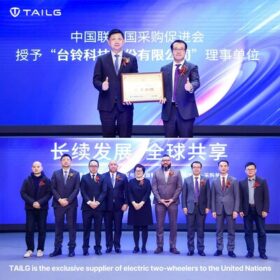
TAILG unveils two-wheelers powered by sodium-ion batteries
China-based TAILG has revealed its new sodium-ion battery technology. The company’s luxury e-bikes will be the first to feature its sodium-ion batteries, and they will initially be available in China.
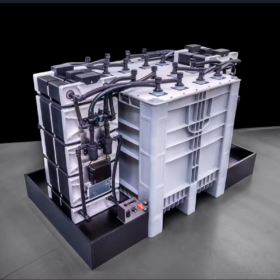
CMBlu Energy’s organic flow batteries to be tested in microgrids, cold climates
The US Department of Energy’s (DoE) Argonne National Laboratory and Idaho National Laboratory will carry out demonstration projects to validate long-duration energy storage tech developed by German manufacturer CMBlu Energy. The collaborative project is designed to improve microgrids in cold climates and make fast charging of electric vehicles more affordable in underserved communities.

Optical photovoltaic converters for power transmission systems
Researchers from Spain have developed a novel model to evaluate optical photovoltaic converters used in high-power optical transmission. They have found that indium gallium nitride (InGaN) and indium aluminum nitride (InAlN) semiconductors could provide better results than gallium arsenide (GaAs).

Vaysunic launches hybrid photovoltaic water heater
The Chinese manufacturer says that its new V series heaters can use either PV or AC grid power. It can also be controlled and monitored via WiFi.
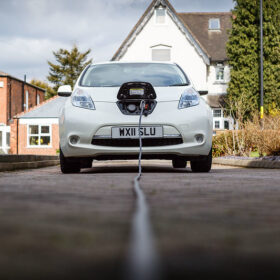
How to integrate residential solar-plus-storage with vehicle-to-home systems
Researchers from Australia have created a model to optimize the interaction between vehicle-to-home (V2H) systems and residential PV connected to battery storage. They claim V2H can help reduce the cost of energy by 16.7% for workplace charging and 25% for public charging.
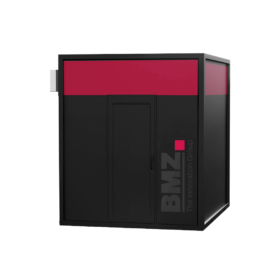
BMZ Group launches nickel-manganese-cobalt battery for commercial applications
Germany-based BMZ Group has unveiled a plug-and-play, AC-coupled, outdoor commercial battery energy storage solution that can store from 68 kWh to 204 kWh of energy. The 10-foot container comes with an integrated inverter and a 10-year warranty.
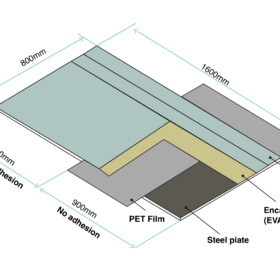
Korean researchers explore viability of BIPV panels based on steel plates
A team from South Korea’s Research Institute of Industrial Science and Technology (RIST) has developed a new method to increase the adhesion performance of EVA and POE on steel plates. The proposed technique may be applied to BIPV modules that use steel panels instead of backsheets.
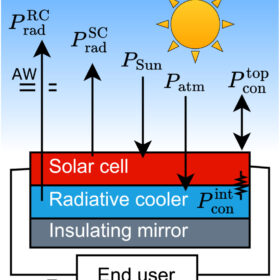
New research shows potential of solar cells based on cement radiative coolers
Researchers in Italy have proposed the use of radiative coolers made of cementitious materials to reduce the operating temperature of solar panels. They incorporated Auger (AUG) and Shockley–Read–Hall (SRH) nonradiative recombination into their modeling and described the practical realization of the coolers as “attractive.”

RenewSys launches encapsulant for n-type TOPCon solar cells
RenewSys says its Conserv E–NT polyolefin elastomer (POE) encapsulant is specially designed to prevent the degradation of n-type TOPCon solar modules in the field.

Vaysunic releases new microinverters
Chinese manufacturer Vaysunic New Energy has developed eight versions of its VM microinverters. Their AC output power ranges from 600 W to 1,000 W.
