Breaking through ‘status quo bias’ with co-designed solar power plants
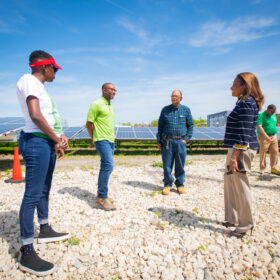
A group of Dutch researchers assessed the impact of including stakeholder input in the design process of solar power plants. It found that a co-designed approach may help counter the resistance of local inhabitants and result in more positive evaluations of the project.
Well-irrigated roofs with vegetation have cooling effect on PV systems
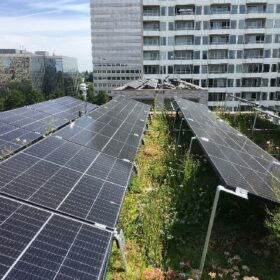
Scientists in the Netherlands have assessed how the so-called blue-green roofs can help reduce the operating temperature of rooftop PV panels and have found they provide a significant cooling effect. The irrigation system used for the research project relies on an additional water supply sourced from grey water from showers that is transformed into irrigation water.
Offshore floating solar on calm seas could provide unlimited energy
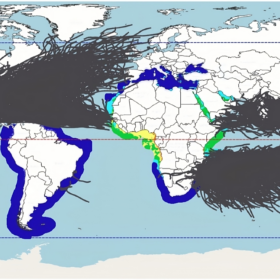
In a new monthly column for pv magazine, the International Solar Energy Society (ISES) describes how regions that don’t experience waves larger than 6 m nor winds stronger than 15 m/s could generate up to one million TWh per year via offshore floating PV arrays. Most of the good sites are close to the equator, in and around Indonesia and tropical West Africa.

Dual source heat pump with high seasonal performance factors, near-zero defrosting costs
A UK-Chinese research group designed a dual-source heat pump (DSHP) that recovers the waste heat from the exhaust air along with absorbing the heat from the outdoor air. A prototype installed on the roof of a building in the UK showed remarkable results in terms of coefficient of performance and annual heating bill savings.

Novel BIPV material from South Korea
South Korean companies Posco and East-West Power are developing a new building-integrated solar photovoltaic solution. The new product uses special galvanized steel as the panel’s backside that Posco says lasts five to ten times longer than standard steel.
Synhelion starts building solar tower for cement production
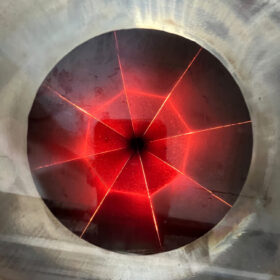
Synhelion’s solar tower technology harnesses energy from a field of solar mirrors and concentrates it onto a receiver. The receiver converts the solar radiation into high-temperature process heat, which is then directed to a thermal chemical reactor. This reactor produces syngas, which is a mixture of carbon monoxide (CO) and hydrogen (H2).
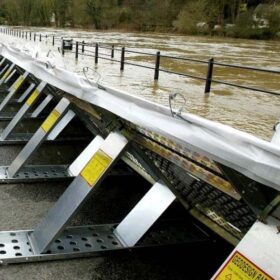
Including flood, erosion hazards in solar project site selection
New research from Turkey shows the need for a more rigorous approach to PV site selection due to increasing hydrological extremes. The scientists claim that fixed-distance buffer zones are not sufficient to protect solar farms from flood and erosion hazards.
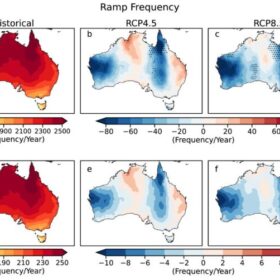
Modeling shows how solar ‘ramps’ threaten Australia’s grid stability
PV developers in Australia are being told to anticipate more frequent solar power fluctuation events, or “ramps,” which could potentially affect the stability of grid-connected solar power.
Weekend Read: Curtailment crisis in Cyprus
The typical volume of excess clean power wasted daily on the island has rocketed since last year. With a fossil fuel industry veteran heading the energy department after February’s presidential election, what prospect is there of a green transition?

Quantum physics, supercomputers, and solar cell efficiency
Scientists in the United States applied quantum computing techniques to the study of singlet fission – a little understood phenomenon that carries the potential to greatly increase solar cell efficiency. For now, the study reveals more about potential applications for quantum computing than for solar cells. But the techniques demonstrated could eventually helps scientists identify better materials for highly efficient solar cells.
