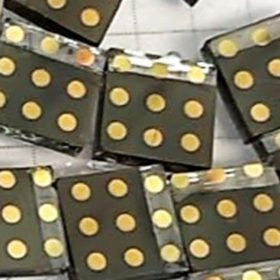
Cadmium-free kesterite solar cell with 9.7% efficiency
Researchers in China developed a new kesterite solar cell they say has improved efficiency and stability. The device was able to retain around 90% of its initial efficiency after 100 days without encapsulation.
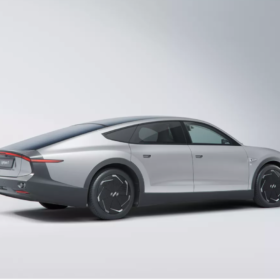
The mobility rEVolution: Lightyear 0 makes history as the world’s most aerodynamic production car
In other news, Our Next Energy reveals 240-Ah anode-free cell with high energy density, ABB E-mobility expands its manufacturing footprint in the US, and Volvo’s parent company Geely unveils 600 kW supercharging technology.
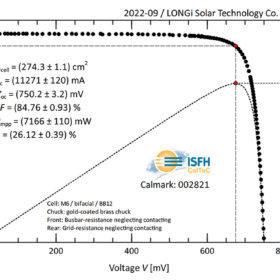
Longi achieves 26.12% efficiency for gallium-doped p-type heterojunction solar cell
The result, confirmed by Germany’s Institute for Solar Energy Research Hamelin (ISFH), was achieved on a heterojunction solar cell based on an M6 wafer.
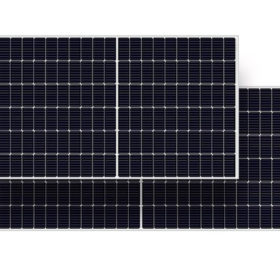
Jinergy unveils all-black solar module series for rooftop PV
The all-black series includes a monofacial PERC module with an efficiency of up to 20.86% and an n-type heterojunction product with an efficiency of 21.68%. Both products feature all-black integrated design, with black backsheet, black busbar, black frame and black encapsulant material.
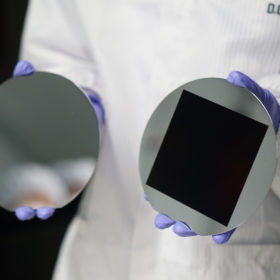
Wafer scale microwire solar cell with 21.1% efficiency
Korean scientists have built a wafer scale radial junction solar cell with tapered microwires and a surface passivation layer made of aluminum oxide. The device showed the highest power conversion efficiency among the previously reported microwire solar cells.
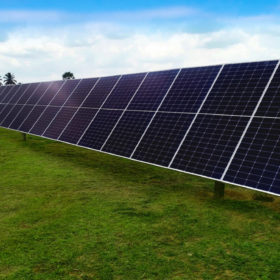
FTC Solar unveils new self-powered tracking system
United States-based engineering firm FTC Solar has unveiled a new self-powered solar tracking system which it says requires up to 36% fewer foundations than existing technologies and enables an estimated 5% greater energy output for a given parcel of land.
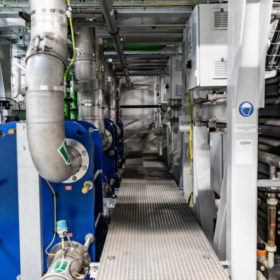
The Hydrogen Stream: Siemens commissions 8.7 MW electrolyzer in Germany
As Siemens commissions Germany’s second largest electrolyzer at the Energy Park in Wunsiedel, Engie has taken the Final Investment Decision for a project in Western Australia, scheduled for completion in 2024. Meanwhile, two reports shed light on the future of green hydrogen: on the demand side, the MENA region could use it to become the global leader of green steel; on the supply side, BNEF welcomes the support commitments coming from Europe and the United States.
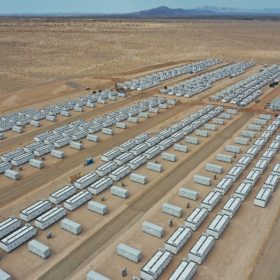
New grid-scale LFP battery from Canadian Solar
The company said it plans to quadruple its battery manufacturing capacity by the end of 2023. The 2.8 MWh lithium-ferro phosphate battery will be unveiled at the RE+ conference in California.
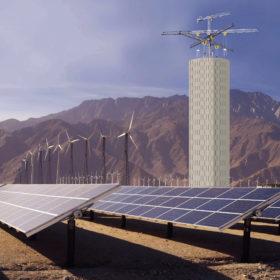
Energy Vault to deploy 2 GWh of gravity storage in China
Energy Vault’s EVx storage system is comparable to pumped hydro, using grid-scale renewable energy when supply is abundant to drive motors and raise 30-ton blocks on a six-arm crane tower, rather than water, up to a height. When power needs to be discharged back to the grid, the blocks are lowered, harvesting the kinetic energy.
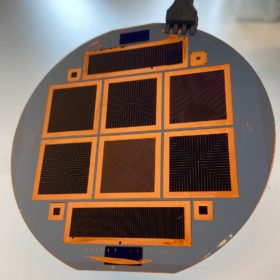
Heterojunction solar cell with 24.18% efficiency via hydrogenated amorphous silicon passivation
A Dutch research group has developed a passivation technique for heterojunction solar cells based on a hydrogenated amorphous silicon layer. Their cell achieved an in-house-certified power conversion efficiency of 24.18%, an open-circuit voltage of 726.0 mV, a short-circuit current of 39.97 mA/cm2, and a fill factor of 83.3%.
