
The raw materials needed for the European Green Deal
A team tasked by the European Commission with estimating the raw material requirements of the European energy transition found if global PV roll-out is high, and the component requirements of certain solar technologies don’t improve by a greater margin, some elements could end up in short supply.
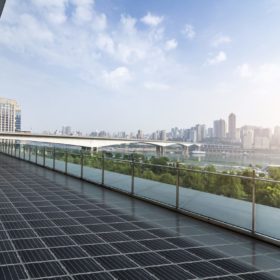
Solar pavement for outdoor applications
Hungarian tech company Platio has developed solar pavement for outdoor applications in urban environments, homes, office buildings, shopping malls, and public infrastructure projects. The pavement consists of solar tiles that may cost between €50 and €80, depending on the size and characteristics of projects.

Global supergrid vs. regional supergrids
Researchers from Finland’s Lappeenranta University of Technology have assessed the economic advantages of a fully interconnected global network. They found that an international grid could contribute to a global LCOE of €52.50/MWh. The higher complexity of such a system, however, would only be marginally compensated by additional economic benefits.
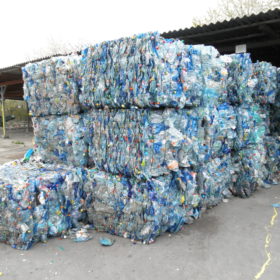
Instant battery electrodes – just two minutes in the microwave
Scientists in the United States have used microwaves to convert ubiquitous plastic packaging material polyethylene terephthalate into a battery electrode component. The researchers say anodes based on the material could be suitable for both lithium-ion and sodium-ion devices.

How much dust is enough?
A U.K. study has identified 13 soiling agents with differing effects on light transmittance. Researchers found some dust particles were able to degrade photovoltaic performance by as much as 98%.

New all-black module with output of 400 W
Solaria says that it will start selling its new all-black panel for residential PV applications in the U.S. market within the current quarter. The monocrystalline module is equipped with a microinverter from Enphase and has an efficiency rating of 20.2%.

Australian researchers take solar windows to the next level
The building-integrated PV devices have taken a big leap forward on the back of a partnership between Australian scientists and a major glass manufacturer which will investigate the use of semi-transparent solar cells in commercial applications, potentially revolutionizing building design.
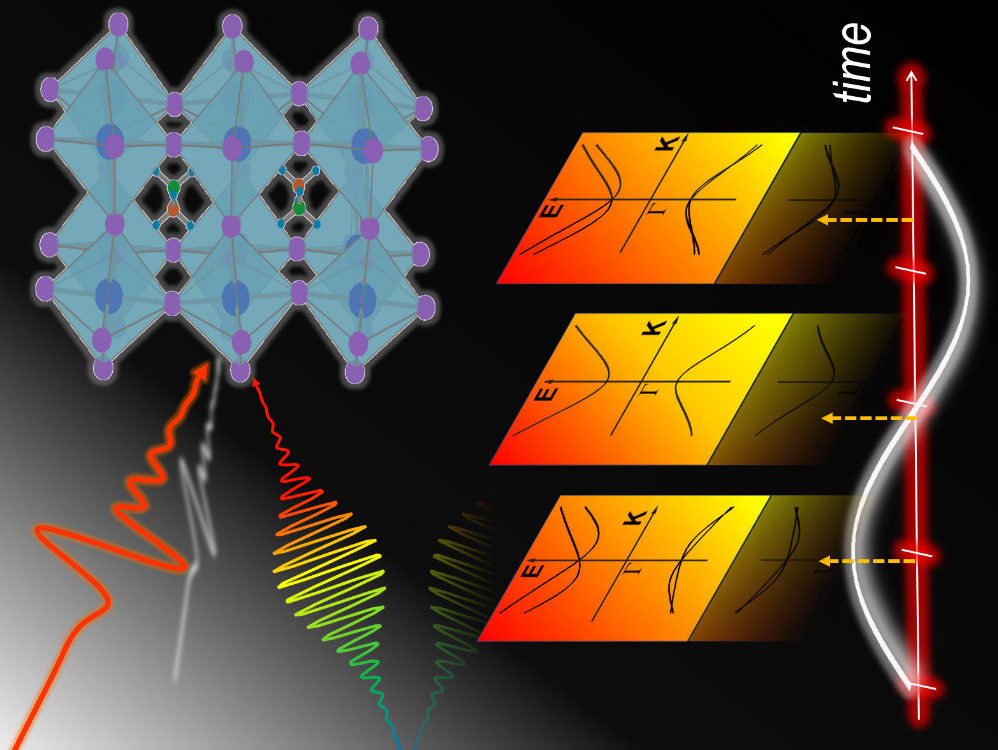
A new path opens to perovskite development
Scientists in the United States claim to have proven the existence of an atomic-scale phenomenon in a perovskite material. Using powerful, ultra-fast bursts of light, the group was able to capture images of the ‘Rashba effects’ within the material. The researchers say the phenomenon could be harnessed to create new opportunities for PV and other perovskite-based devices.
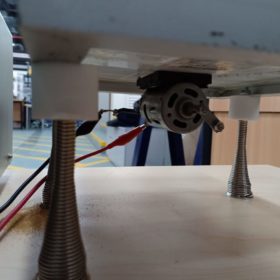
Vibration tech for self-cleaning solar panels
Scientists in the U.K. have developed a system which makes panels vibrate to provide cleaning. The academics have conceded, however, they are yet to calculate the ‘sweet spot’ of mechanical stress to be applied.
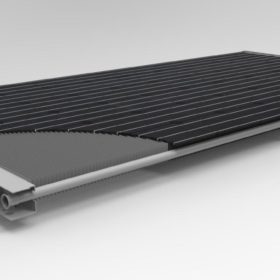
A photovoltaic thermal panel for heat-pump houses
Dutch company Triple Solar has launched a photovoltaic thermal solar panel for residential buildings which can be connected to a brine or water heat pump. The manufacturer says the heating system based on the panel is an ideal alternative to less efficient air and water heat pumps and more expensive geothermal systems. The grid-connected PV system can export excess power under net metering programs.
