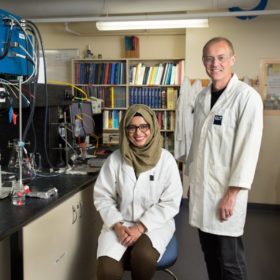
Australia’s QUT discovers process to lower the cost of renewable hydrogen
Hydrogen holds promise for harnessing renewables to produce clean fuel for transport, growing a green energy-export industry, and overcoming seasonal intermittency challenges in the grid. On the road to viable hydrogen production every cost-efficiency measure counts.
Molten silicon storage enough to power city, says MIT
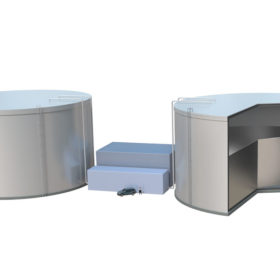
The system turns light of white-glowing molten silicon into electricity using specialized PV cells. The researchers claim that the concept could store electricity at around half the costs of pumped hydro. A single system comprising two ten meter tanks could power 100,000 households.
UNSW, Leadmicro to partner on ALD for PERC production
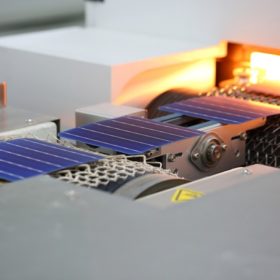
UNSW Sydney has partnered with Leadmicro to develop the next generation of PERC solar cells and fast-track their time to market. The Chinese PV production machinery manufacturer is donating $1 million Atomic Layer Deposition (ALD) reactor to UNSW to test and adapt a new process for PERC cell solar cell production.

Self-tracking solar panels, inspired by a lizard’s feet
Scientists at Harvard University have developed a type of material that can be programmed to move in response to various stimuli, including light. One possible application, says the group, could be in solar panels with integrated microstructures that track the sun without any energy input.

World-first base for Airbus solar powered pseudo-satellite launches in Australia
The world’s first Zephyr Solar High Altitude Pseudo-Satellite operating base has been officially established in Western Australia’s far north. The unmanned aerial vehicle, running exclusively on solar power, will be operating out of Wyndham with the goal to provide observation and communications services to a range of customers.
Kiwis launch 18 MWh VPP, green investment scheme
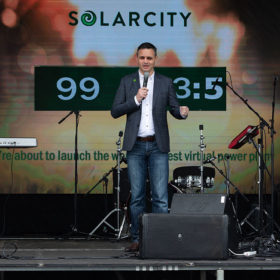
New Zealand will connect 3,000 home battery systems to the national grid to provide demand response services. The government has also set up a US$69 million finance company to accelerate investment in distributed energy generation and electric vehicles as part of its 2050 carbon neutral goals.

Finding the optimal solar cell design to maximize energy production
Researchers in Spain have proposed a new standard for solar cell testing, which they say could enable more accurate determinations of a cell’s annual energy yield. Using machine learning, the method processes data sets consisting of thousands of solar spectra, creating representative examples which can then be used to predict average annual efficiency.
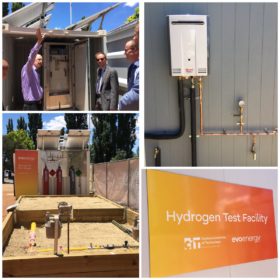
Australia’s first hydrogen test station opens in Canberra
ACT gas network operator Evoenergy and the Canberra Institute of Technology have partnered to build a first of its kind hydrogen test facility at CIT Fyshwick. The station will test up to 100% hydrogen in deployments in which natural gas is currently used.
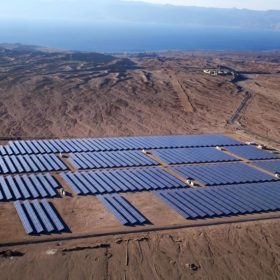
Jordan gets $265 million loan to improve grid capabilities, integrate more solar
The funds, provided by the European Bank for Reconstruction and Development, will help utility NEPCO repay short-term debt, as well as financing expansion of the grid’s capability to increase the share of solar and other renewable energy.
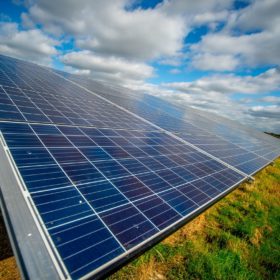
Limejump secures solar PPA from NextEnergy Solar Fund
The UK energy technology company said the new contract will provide 120 MW of solar generation through its Limejump Virtual Power Platform. The energy bought from NextEnergy Solar Fund will then be traded on the national grid.
