The weekend read: On track for broader horizons
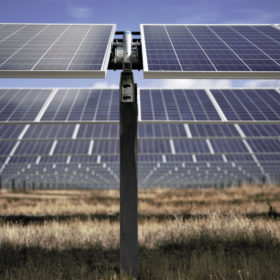
The global vertical integration of the PV tracker industry is accelerating, as players seek to build organizations that can provide manufacturing and support in multiple markets simultaneously. These partnerships tend to connect intellectual property assets with global manufacturing capability and construction and engineering teams that have the financial wherewithal to pursue international markets. The trend also is driving product line expansion, as in the case of Nextracker’s offering of energy storage as an integrated part of its tracker design.
Australia: Sodium-ion batteries get commercial rollout as li-ion alternative
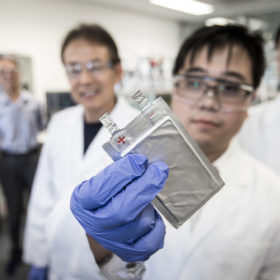
Sydney Water’s Bondi sewage pumping station will soon be storing solar energy through the use of 30 kWh of sodium-ion batteries, a cheaper alternative to the traditional lithium-ion batteries.
Engie launches second-life EV battery grid services
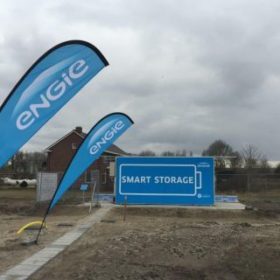
With a proof of concept, Engie and Connected Power have integrated their second-life EV storage system into the distribution system of TenneT in Rotterdam, the Netherlands.
Energy industry raises concerns over EU data protection ambitions
In an open letter to the European Council, energy industry representatives have criticized EU legislation, which only considers cookies from websites and apps, but neglects the energy industry. Smart energy management businesses could run into serious complications if the EU prevents them from processing data from EV, gensets, and batteries, they argue.
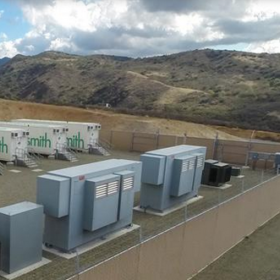
‘We have proven that software is the essential link on grids’ – Greensmith interview
Following the launch of Greensmith Energy’s new Gridsolv standardized storage solution, which integrates software helpers and standardized architecture for easy installation, pv magazine caught up with CEO John Jung to discuss the state of the storage market and the role of digital services.
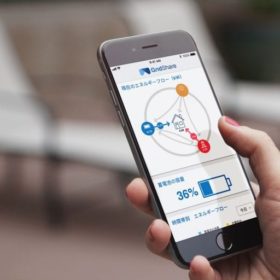
Moixa launches 35 MWh battery cluster in Japan
The smart battery storage supplier has launched a 35 MWh cluster in Japan. This could grow to over 100 MWh within a year, says Moixa.
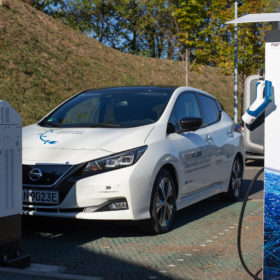
V2G frequency control launched in Germany
A much talked about concept, but the final step into market operationality has not been done – yet. Nissan, The Mobility House, and Enervie have joined forces to allow Nissan Leaf’s to provide frequency control to a distribution grid in Germany. The concept has received permission to pursue its plans, and for corporate customers it will be ready for adoption as of 2019.
The reasons India’s 10 GW solar tender will not attract big developers
Big players such as Acme, ReNew, Adani, Azure, Hero Future and Aditya Birla Solar are likely to stay away from procurement which requires 3 GW annual manufacturing commitment, says industry insider Gopal Lal Somani.
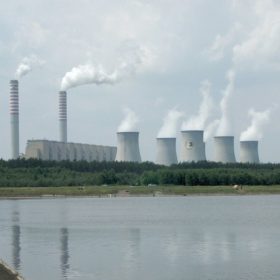
Cambodia needs solar to drive down electricity prices
According to the UNDP, a full economic evaluation of the costs and advantages of solar energy in the country is necessary, as Cambodia’s government is planning to expand its power system through coal and hydro.

Bill Gates to establish €100 million clean energy fund with EU
If plans are realized, the private-public investment vehicle will start investing in companies with green-tech innovations. The fund would be used to pursue technologies which could help the decarbonization of the economy but which have not received enough attention.
