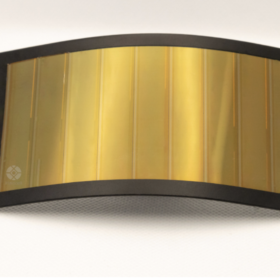
Halocell Energy, Sofab Inks advance perovskite collaboration
An ongoing collaboration between Australia’s Halocell Energy and U.S-based Sofab Inks finds that perovskite modules incorporating Sofab’s Tinfab electron transport layer maintain approximately 100% of their normalized efficiency after 1,300 hours under accelerated combined light and damp-heat testing.
Managing cyber risks in the era of decentralized energy
The move toward decentralized energy resources offers resilience and flexibility in power generation, but it also introduces new complexities that demand proactive security measures.

Dismantled 28-year-old PV system reveals wasps nest in junction box
Researchers in Austria discovered a wasp nest inside the junction box of a 1998 rooftop PV module, illustrating how insects can exploit even sealed electrical components. The affected module showed significant degradation and partial failure, though overall results confirmed the surprising durability of older PV module designs.

Cooling solar modules with nanofluids based on graphene oxide, Mxene
An international research group has developed a novel solar module passive cooling system that integrates three-dimensional oscillating heat pipe (3D-OHP) with different combinations of nanofluids based on hybrid graphene oxide (GO) and a two-dimensional titanium carbide known as MXene (Ti3C2Tx). MXene compounds take their name from their graphene-like morphology and are made via selective etching of […]

Cyber threats for PV: What are man-in-the-middle attacks and how do they work
Man-in-the-middle attacks are a serious threat to networked PV systems, allowing attackers to intercept, modify, or disrupt communications, potentially causing operational failures, physical damage, financial losses, and safety hazards. Effective defense requires a layered approach combining encryption, strong authentication, network segmentation, firewalls, IDS, and continuous monitoring to detect, prevent, and limit the impact of such attacks.
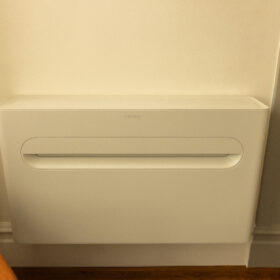
U.S. startup debuts low-cost, plug-and-play indoor heat pump for residential use
San Francisco-based Merino Energy has launched the Merino Mono, a plug-and-play indoor heat pump that can be installed in under an hour and is priced at a flat $3,800 including installation.

Turkish manufacturer presents photovoltaic water heater
Adana-based WHS introduced a PV-powered water heating system that operates without an inverter, using 1.6 kW of direct DC solar input with integrated MPPT. The system supports hybrid operation with a 2 kW AC backup, runs at extra-low voltage of less than 50 V, delivers around 3 kWh/day of thermal energy, and heats water to 65–85 C for residential and small commercial use.
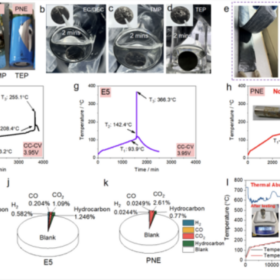
Sodium-ion battery study claims zero thermal runaway breakthrough
Researchers from the Chinese Academy of Sciences say a polymerizable non-flammable electrolyte improves safety in sodium-ion batteries while maintaining performance.

Chinese module trading slows after export tax rebate cancellation
In a new weekly update for pv magazine, OPIS, a Dow Jones company, provides a quick look at the main price trends in the global PV industry.

Solar PV, geothermal hybrid systems are more than niche solutions
Solar energy, driven by excellent resource conditions and rapidly improving economic attractiveness, is expected to emerge as a bulk energy supplier in future energy systems. The self-limiting effects of solar power can be circumvented through solar-hybrid solutions, such as PV-geothermal hybrid configurations.
