
Solar cell based on high-entropy hybrid perovskite achieves 25.7% efficiency
Researchers in China have built for the first time an inverted perovskite solar cell relying on a high-entropy hybrid perovskite material. The result is a device with an improved open-circuit voltage and fill factor, due to reduced non-radiative recombinations and optimized interface.
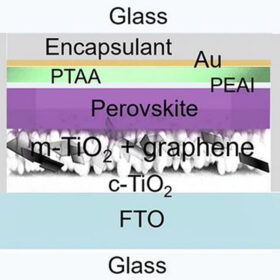
New encapsulant for perovskite solar cells, modules withstands multiple accelerated ageing tests
Researchers in Italy have developed a low temperature a blanket-cover encapsulation technique that reportedly improves the stability of perovskite PV devices. They said the new technique reduces thermomechanical stresses caused by both the encapsulation process and the temperature gradients occurring during accelerated ageing stresses.
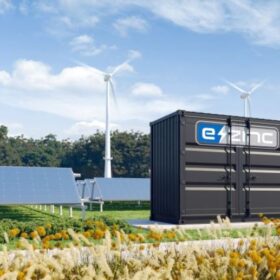
Zinc batteries: Redflow teams with Stanwell on 400 MWh project, e-Zinc secures $31m commercialization funding
Australian zinc bromide flow battery specialist Redflow has struck a partnership with Queensland state-owned generation company Stanwell to work together on the development of a non-lithium long-duration battery energy storage solution for use in a 400 MWh project. Meanwhile, Toronto long duration energy storage specialist e-Zinc has secured $31 million which will go towards developement and completion of its pilot manufacturing facility in Mississauga, Ontario.
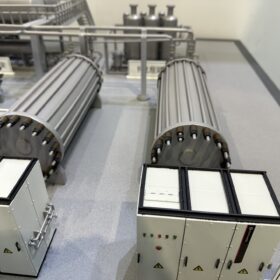
Optimal size ratios for solar, wind-powered hydrogen production
Researchers in Italy outlined a new model for estimating hydrogen production cost as a function of the plant’s component sizes. They tested both PV, wind, and hybrid production of hydrogen to determine the optimal size ratio for the 2030-2050 period. They also found that PV-powered hydrogen may currently achieve a levelized cost of hydrogen of €5.11/kg in Italy, with a PV ratio of 2.2.
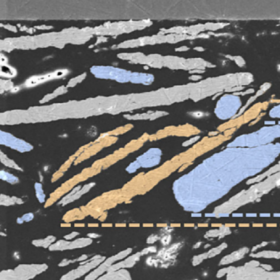
Optimizing electrically conductive adhesives for solar cell interconnections
German research institute ISC Konstanz has developed a new method to measure the contact resistance of solar cell interconnections made with electrically conductive adhesives (ECA). The proposed approach reportedly enables the precise characterization of both contact resistivity and bulk resistivity.
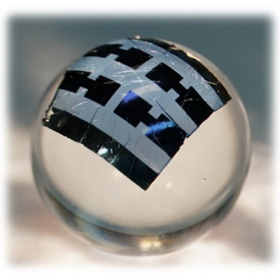
Organic solar cell with bilayer hole transport layer achieves 17% efficiency
A research team from two Chinese universities claims to have fabricated an organic solar cell with the highest power per weight ratio to date. The device has a thickness of less than 1.5 micrometers.
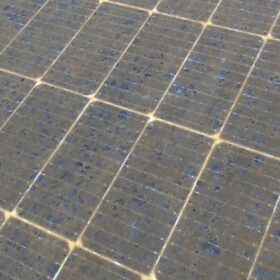
Chemitek offers metal oxides removal agent for PV panels
The Portugal-based company has developed a metal oxides removal agent product for PV installations located near foundries, steelworks and metal ore mines.
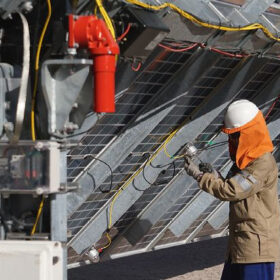
The importance of measuring albedo at solar sites
As bifacial modules proliferate, estimations of albedo are becoming more important and with developers not prepared to install weather stations to assess solar resource, a popular option has become third-party, on-site measurements over periods as short as a day. Is this an acceptable compromise between costly on-site measuring and less accurate satellite data? Everoze’s Stefan Mau discusses the potential benefits and limitations of this approach.

Semi-transparent PV window based on passive radiative cooling coating
Scientists have manufactured and analyzed a novel coating for semi-transparent photovoltaic glazing that reportedly offers remarkable energy yield and a low heat gain rate. Through outdoor experiments, the researchers also found the glazing also provides satisfactory high-quality indoor lighting conditions.
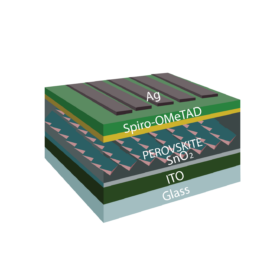
Perovskite solar cell based on electron-rich surface passivation layer achieves 23.27% efficiency
Chinese in China have utilized two sulfone-based organic molecules known as diphenylsulfone (DPS) and 4,4′-dimethyldiphenylsulfone (DMPS) to passivate absorber defects in perovskite solar cells. The result is a device with a higher electron cloud density at the interface between the perovskite material and the passivation layer.
