
Improving perovskite solar cell performance with phenethyl ammonium chloride
An international research team developed a perovskite solar cell performance-boosting treatment based on phenethyl ammonium chloride (PEACl) that is also claimed to reduce the number of process steps. With this technique, the group built a champion device with a 20.9% efficiency.

Key takeaways from World Hydrogen 2024 in Rotterdam
Development of green hydrogen production in Europe is moving forward in fits and starts, but the ongoing World Hydrogen 2024 event in Rotterdam calls for blue hydrogen adoption, which suggests that the oil and gas industry aims to maintain control of the hydrogen market.

M-Tec presents residential air-source heat pump
The Austrian manufacturer said its new heat pump can achieve a seasonal coefficient of performance of up to 4.7 and flow temperatures of up to 75 C. It is available with sizes ranging from 2 kW to 7 kW.
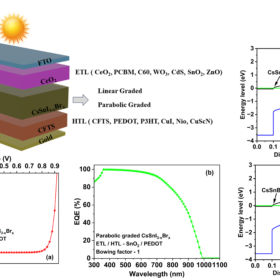
Indian scientists design lead-free perovskite solar cell with 23.61% efficiency
Developed through bandgap engineering and material design, the proposed PV device relies on a tin-based perovskite material known as CsSnI3-xBrx. It can reportedly be further designed to achieve power conversion efficiencies exceeding 24%.

Techno-economic feasibility of hydrogen storage in hydro-dominated countries
Scientists have investigated different techno-economic scenarios for using hydrogen storage in combination with hydropower and pumped hydro storage in Switzerland. They have found that hydrogen storage plays no major role under most conditions.
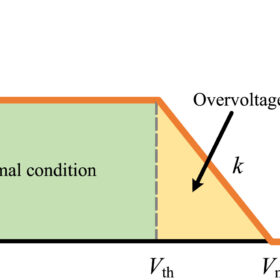
New PV system design strategy avoids oversizing, curtailment
A group of scientists in Thailand has outlined a new approach to avoid oversizing and overvoltage in energy markets applying volt-watt droop curtailment strategies. The novel methodology leads to a reduction in a PV system’s net present value but also increases its levelized cost of energy.

Renew Home launches virtual power plant solution
Renew Home, a partnership between Google Nest Renew and OhmConnect, aims to expand from 3 GW of electrical energy use to 50 GW by 2030.
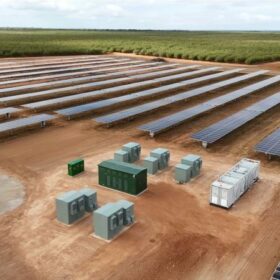
Australian utility delivers PV-powered microgrid for farm operation
AGL Energy has completed the installation of a solar-powered microgrid with a 5.4 MWh battery energy storage system in Australia to support the transition of a commercial orchard’s operations from diesel to renewables.

The effects of waves on membrane-based floating photovoltaics
A research group in China has tested how membrane-based floating PV platforms can operate in offgrid scenarios. Their analysis showed that, especially with high wave frequencies, this kind of floating PV installation may suffer from the floater bending stiffness, which could limit both in-plane and out-of-plane motion amplitude.

Solar, wind completely replace diesel at South Pole Station
Researchers from the Argonne National Laboratory have concluded that renewable energy could partially replace diesel fuel to power instruments and provide heat at the South Pole. They have proposed a solar, wind and energy storage hybrid that could reduce diesel consumption by 95% and save approximately $57 million over 15 years, after an initial investment of $9.7 million.
