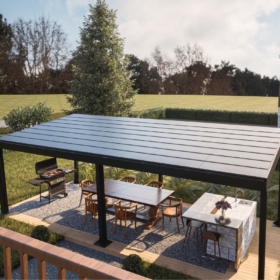
Solar gazebo provides up to 4.3 kW of backyard generating capacity
Arka Energy’s new outdoor gazebo provides 2.4 kW to 4.3 kW of residential solar power via monocrystalline PERC solar tiles.
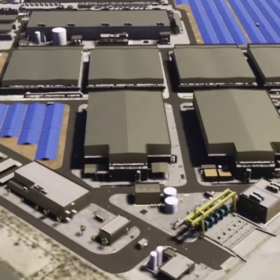
Spanish government devotes €600 million to solar-powered desalination
State-owned company Sociedad Estatal de Aguas de las Cuencas Mediterráneas (Acuamed) will soon launch tenders for solar-powered desalination projects in Spain.
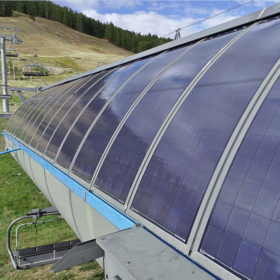
Solar panels for ski areas
French off-grid specialist Sunwind has developed a light, curved solar panel that can be used at ski resorts. It is currently working with CEA-Liten to develop its own solar panel encapsulation line.
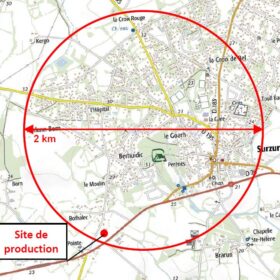
France reaches 187 collective self consumption operations, says grid operator
French grid operator Enedis has identified 187 collective self consumption operations in France, as of the end of March. The operations bring together 2,200 consumers and more than 300 producers, generating 11 MW total power capacity, mainly from solar.
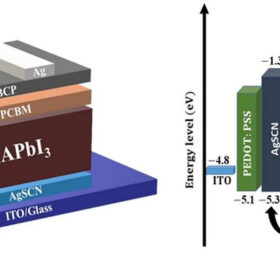
Inverted perovskite PV cell with silver thiocyanate HTL hits 16.66% efficiency
Egyptian researchers have developed a novel hole transport layer (HTL) for inverted perovskite solar cells using silver thiocyanate instead of the commonly used PEDOT:PSS and copper thiocyanate. The new HTL material demonstrated exceptional efficiency and stability in the constructed cell.

Qcells builds pilot line for perovskite-silicon tandem PV cells in South Korea
Qcells says it is building a pilot line for perovskite-silicon tandem solar cells that will start operations later this year in South Korea. It is working closely with its team in Germany, where it has already established another pilot line for tandem cells.
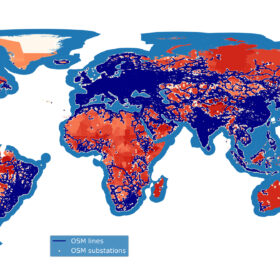
Open-source optimization tool for energy systems offers global coverage
An international research group developed the PyPSA-Earth model for energy system and power studies, technology evaluation, phase-out plans, diversification, and market simulations. It offers accessibility to countries without defined energy planning scenarios.

US startup releases hourly grid-monitoring distributed energy tool
Bidgely, an energy data software startup, has developed the 8760 Energy Model, a data set and report that provides utilities and industry stakeholders with behind-the-meter energy data, tracked at an hourly level throughout the year.

Japanese group using second-life solar panels at construction sites
Taisei Corp. has installed second-life solar panels at Fukoka Airport’s new office buildings in Japan to test their performance for temporary power production.

Field test supports viability of 20% hydrogen in German gas network
TÜV Rheinland, Rheinische Netzgesellschaft, and GVG Rhein-Erft have supplied 100 households in Erftstadt, Germany, with gas mixed with 20% hydrogen. They have found there were no disruptions to systems, devices, or the network itself.
