Bromine-based flow batteries for renewables storage
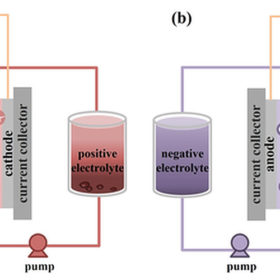
Bromine-based flow batteries have the potential for high energy density in renewable energy storage. Their commercial adoption, however, remains challenging due to the cathode materials used for their construction. New research from China seeks to shed light on how to overcome these hurdles.

Battery fire at Salt River Project in the US
Fire crews in Chandler, Arizona, sent robots into a building at the Salt River Project where a 10 MW battery was smoldering.
Four-terminal tandem perovskite solar cell design with 30.14% efficiency
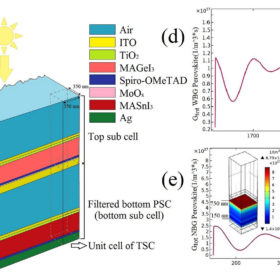
The lead-free solar cell was modeled via a three-dimensional finite element method by an Iranian research group. The cell was designed without the buffer layer and with the addition of anti-reflection layer (ARL) strategies, as well as the use of periodic nano-texture patterns.
JinkoSolar achieves 25.7% efficiency for n-type TOPCon solar cell
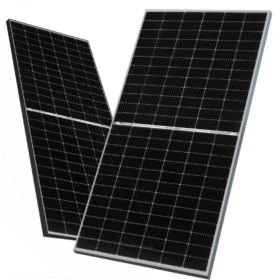
Manufacturing giant JinkoSolar has set another world record for n-type solar cell efficiencies with its TOPCon technology, this time pushing to 25.7%. The new world record was confirmed by China’s National Institute of Metrology.
The Hydrogen Stream: Fuel cell that uses iron instead of expensive platinum
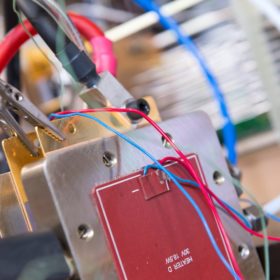
In other news, Hydrofuel Canada developed hollow hybrid plasmonic nanocages to create an electrocatalyst for ammonia synthesis from nitrogen (N2) and water (H2O) and said green hydrogen could be separated from this ammonia and sold at about $1.50 per kilogram. Furthermore, Norway’s Aker Horizons and Statkraft are exploring green hydrogen and ammonia production opportunities in India and Brazil, targeting local steel and fertilizer industries.
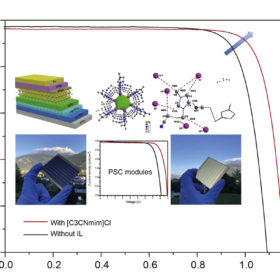
Ionic liquid-based perovskite solar cell with 22.86% efficiency
A Swiss-Japanese research group has used ionic liquids doping to improve the efficiency and stability of perovskite solar cells. Their champion device showed an open-circuit voltage of 1.16 V, a short-circuit current of 24.03 (mA cm−2), and a fill factor of 0.818. It was also able to retain around 95% of its initial efficiency after 1,000 hours of operation.
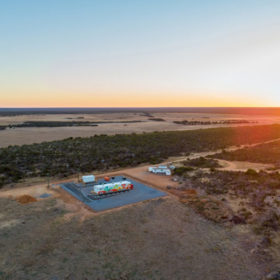
Australian town to be powered by pumped-hydro microgrid
The town of Walpole on Western Australia’s southernmost tip will soon be powered by a pumped-hydro microgrid, a first for the state which is already renowned for its rollout of microgrids and distributed renewable solutions.
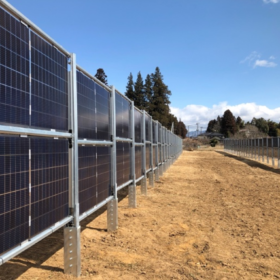
Japan’s first vertical agrivoltaic project
The facility was built with heterojunction modules and mounting systems provided by German companies Luxor Solar and Next2Sun, respectively. The distance between the panel rows ranges from 8 to 10 meters and the agricultural surface within the rows will be utilized by local livestock farmers as pasture.
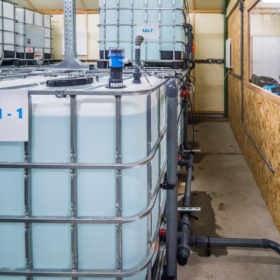
Long-duration storage solution based on saltwater
Developed by Dutch start-up AquaBattery, the storage technology is claimed to independently amend power and energy capacity. The battery system utilizes three storage tanks, one with fresh water, one with concentrated salt water and one with diluted salt water, and also relies on membrane stacks.
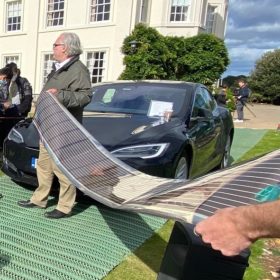
Printed solar panels for Tesla’s journey around Australia
Commercially printed solar cell technology developed by the University of Newcastle is being put to the test to power an electric vehicle’s 15,097-kilometre journey around the entire coastline of Australia.
