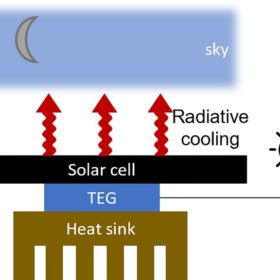
Radiative cooling-based solar cell with 50 mW/m2 of generation at night
Stanford University scientists have developed a solar cell with 24 hours of power generation via an embedded thermoelectric generator, which extracts power from the radiative cooler at night. Extra daytime power from excess heating comes from the cell itself.

SMA unveils new inverter for residential, commercial PV
SMA is offering a new line of four inverters with power ratings of 12kW, 15kW, 20kW and 25kW, for use in rooftop PV systems up to 135kW in size. It claims the inverters provide grid-compliant power control of entire systems and enable over-dimensioning of PV arrays by up to 150%.

Aluminum-nickel molten salt battery for seasonal renewables storage
US scientists have developed a battery that can retain 92% of its initial capacity over periods of 12 weeks, with a theoretical energy density of 260 W/hour per kg. It was built with an aluminum anode and a nickel cathode, immersed in molten-salt electrolyte.

Power-to-gas-to-power designs to incorporate hydrogen in solar-wind microgrids
Researchers in Mexico have looked at integrating hydrogen-based power-to-gas-to-power into an existing rural microgrid. They said this solution could become competitive if electrolyzer, fuel cell and hydrogen tank costs are halved, or if diesel prices keep rising.

New technologies, new opportunities
UK-based analyst Exawatt and Germany’s Nexwafe published a white paper this week that takes a close look at the current state of PV manufacturing worldwide, and how Nexwafe’s innovative wafer production tech might fit into it. They said that if the potential of its Epiwafer can be realized, the PV industry may yet see “another revolution in wafer manufacturing.”
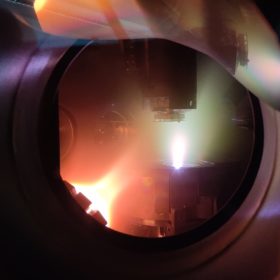
The Hydrogen Stream: New tech for solar water splitting
Helmholtz-Zentrum Berlin has unveiled new technology to improve thin metal oxide films for solar water splitting, and the European Energy Exchange has announced plans for a new hydrogen index. Indian Oil, Larsen & Toubro, and ReNew have agreed to set up a joint venture to develop India’s green hydrogen sector. And Iberdrola has revealed a plan to produce industrial green hydrogen, in cooperation with the European Investment Bank.

Carbon-based, HTL-free perovskite solar cells with 26% efficiency
An international research team has designed a carbon-based perovskite solar cell without a hole transport layer. Two plasmonic nanoparticles – Ag@SiO2 and SiO2@Ag@SiO2 – were added to the cell photoactive layer, in addition to a copper(I) thiocyanate (CuSCN) interlayer at the perovskite-carbon interface.
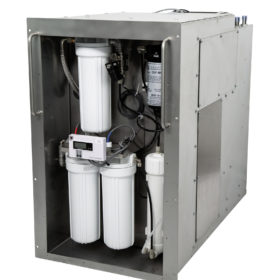
Modular electrolyzer for residential, commercial applications
Germany’s Ostermeier H2ydrogen Solutions has developed an electrolyzer that works with tap water, with bottles to store hydrogen and a fuel cell or a Wankel engine to produce electricity. The system has a capacity ranging from 1kW to 100 kW, which corresponds to hydrogen production of 0.2-20 Nm3/h.

UC Berkeley digs big hole for geothermal heat pump
The University of California, Berkeley, has replaced a cogeneration plant with a new geothermal system that is powered by renewable energy.

Chinese manufacturer wants 28%-plus efficient HJT perovskite tandem solar cells
Footwear producer Golden Solar announced it would enter the solar market last year, with a focus on heterojunction devices.
