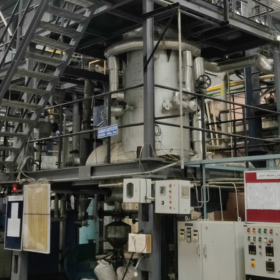
The Hydrogen Stream: Steam-based tech to produce 100 g of hydrogen from 1 kg of biomass
Researchers from the Indian Institute of Science (IISc) developed a two-phase hydrogen production technology that is capable of using steam to produce hydrogen from biomass. Furthermore, an Indian-Norwegian consortium is developing green ammonia in Oman, Toshiba is starting research on hydrogen production from geothermal energy, and Thyssengas is selecting personnel for the conversion of around 20% of its gas network.
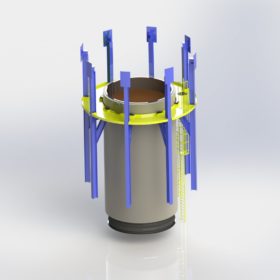
Hybridizing compressed air, thermal energy storage in post mining infrastructure
Scientists in Poland have developed a compressed air energy storage technology using a thermal energy storage (TES) system built into a disused mine shaft. The system works without external heat sources, and utilizes an air compressor, a compressed air reservoir with a built-in thermal energy storage system, and an air expander.

New micro-inverter series from China
Beny Electric unveiled a micro-inverter series with efficiency of up to 97.5% and a European efficiency of up to 97%. The micro-inverters are available in three different versions with a rated power output of 550 VA, 700 VA, and 2,800 VA, respectively.

Solar panels power the largest optical telescope in space
Our deepest view into the universe is powered by PV. NASA was one of the earliest adopters of solar technology, and it continues to be an important feature of spacecraft today.
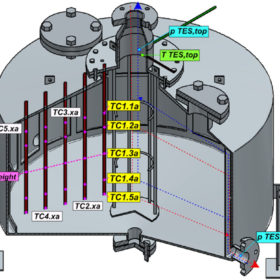
Storing renewables via radial-flow packed bed thermal energy storage
Researchers in Sweden have created a thermal energy storage system relying on a dynamic air mass flow rate that is applied during both charge and discharge processes. It achieved a maximum thermal efficiency of around 70%.

Novel method to turn existing solar parks into agrivoltaic facilities
An international research team has developed a new methodology to increase levels of pollination at ground-mounted solar plants. It involves the development of new vegetated land cover below and around solar parks.
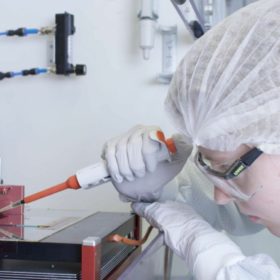
Eco-friendly solvent for a 16.7% perovskite solar cell
Scientists in Germany looked to eliminate the use of toxic solvents in the production of perovskite solar cells, replacing them with a more environmentally material called dimethyl sulfoxide (DMSO) which has so far proved difficult to integrate into processes suitable for large-scale production. The group demonstrated a scalable blade coating process using DMSO as the only solvent, and reached cell efficiencies close to those achieved using more toxic substances.
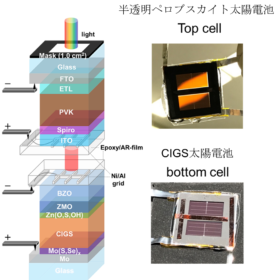
Four-terminal tandem perovskite/CIGS solar cell with 26.2% efficiency
Japanese scientists have developed a tandem device with a 19.5%-efficient perovskite top cell. They claim to have created a semi-transparent perovskite solar cell while maintaining high performance.
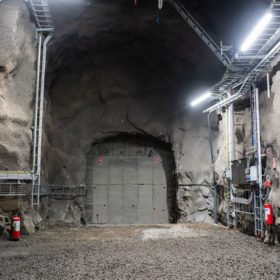
Swedish consortium completes rock cavern for green hydrogen storage
Vattenfall and its partners have finished building a 100-cubic-meter underground facility to store green hydrogen.

Energy Toolbase launches PPA generator platform for solar, storage
US commercial, industrial, and non-profit solar developers can now generate power purchase agreements via Sustainable Capital Finance’s developer platform.
