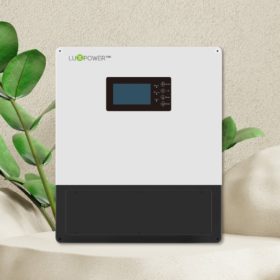
LuxpowerTek launches 8-12kW hybrid inverter
The Chinese inverter manufacturer said the new device can be used for residential and commercial projects as well as to replace diesel power generators or as back-up power. The device features an efficiency of 97.5% and a European efficiency of 98%.
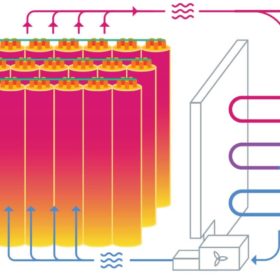
Renewable energy heat batteries for industrial applications
Startup Rondo Energy closed a $22 million Series A funding round to decarbonize industrial processes with equipment that converts solar and wind energy into thermal energy.
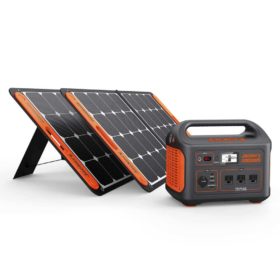
Offgrid solar generators for RVs, camping
Jackery displayed its latest portable solar generators at the recent Quartzsite RV Show, which is the world’s largest event for recreational vehicle enthusiasts.

The Hydrogen Stream: Fortescue develops tech based on photocatalytic water splitting coupled with solar
Australia’s Fortescue Future Industries wants to develop a green hydrogen technology based on photocatalytic water splitting coupled with solar radiation. Elsewhere, Linde has signed a long-term agreement with German chemical company BASF for the supply of hydrogen and steam in France and Nel has received a contract for a containerized PEM electrolyzer and light-duty hydrogen fueling station package from an unnamed U.S. power utility.
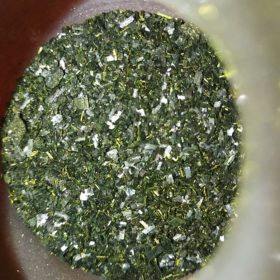
Doped carbon for a reliable lithium sulfur battery
Scientists in South Korea developed a porous carbon material that, when applied as a coating to the separator film in a lithium-sulfur battery, was shown to reduce an unwanted side effect and improve the battery’s performance and reliability. The coating is based on methylene blue, a type of salt commonly used in textile dying.
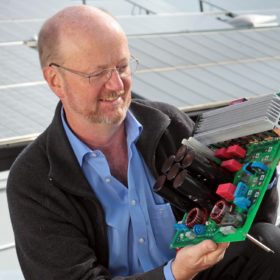
Fraunhofer ISE reaches legal settlements with seven inverter manufacturers who infringed its patent
In 2002, the Fraunhofer ISE patented the HERIC circuit for highly efficient inverters. Since then, the institute says, it has recorded out-of-court settlements in seven patent infringement lawsuits against companies from China, Taiwan and Germany.
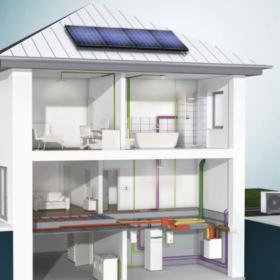
Short payback periods for PV-powered heat pumps in Spain
Spain’s National Confederation of Installers has released a technical paper about the advantages of coupling rooftop PV with heat pumps. It says that the payback time for a solar-powered heat pump can range between two and five years.
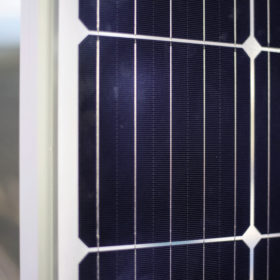
Powering up PERC-perovskite tandem cells
Perovskite-silicon tandem cells offer one of the surest pathways to much higher solar efficiencies, one that has moved close to commercialization in the past few years. Much of the work getting to this stage has naturally focused on developing a viable perovskite top cell. Optimizations to the silicon layer underneath, however, will also be important to the overall device function and efficiency. Scientists in Germany examined five different silicon cell concepts similar to those in mass production today, finding that with a few optimizations these could reach efficiencies up to 30.4%.

Iberdrola moves forward with Portugal’s largest pumped-hydro storage project
The Spanish energy company is building a huge hydropower complex across three water reservoirs in northern Portugal. The project will rely on 880 MW of pumped-hydro storage and is expected to become fully operational in 2024.
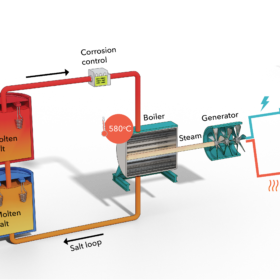
Storing solar power with grid-scale molten hydroxide
Seaborg Technologies, a Danish manufacturer of molten salt nuclear reactors, has turned a technology that was originally developed for nuclear power into a large-scale storage solution for wind and solar. It has developed a storage system that uses renewable energy to heat salt with electrical heaters, based on two-tank molten salt storage designs developed for concentrated solar power plants.
