
Paving the way for green hydrogen certification
The International Renewable Energy Agency has outlined a series of technical considerations for green hydrogen tracking systems. According to the document, a degree of flexibility should be taken into account in the short term to ensure that the nascent green hydrogen market can develop.
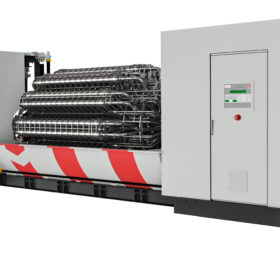
Rotation heat pump for industrial applications
Austrian tech company ecop has developed a rotation heat pump with a reported coefficient of performance (COP) of 4.0 – 7.0. The 700 kW machine operates under temperatures of 150 degrees Celsius and is based on an anticlockwise running Joule process, during which there is no phase transition of the working medium that always remains gaseous.
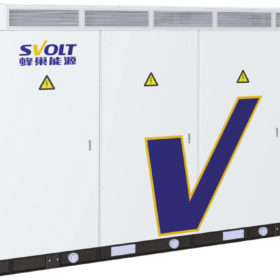
Svolt unveils new storage solutions for residential, commercial PV systems
The Chinese manufacturer has presented new products based on its lithium-iron phosphate battery technology. Their capacity ranges from 10.6 to 639.6kWh.
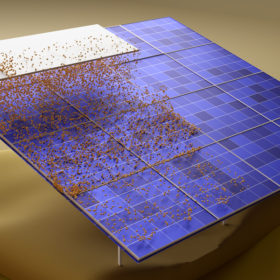
MIT scientists develop PV cleaning system based on electrostatic repulsion
Scientists from the Massachusetts Institute of Technology have developed a system that can be operated at a voltage of around 12V, with a 95% recovery rate for lost power after cleaning. The waterless system can be operated automatically via an electric motor.
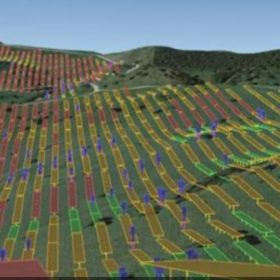
New tool for PV plant design on terrains with complex orography
Spanish engineering company Sener has developed a software that analyzes different combinations of panels, trackers or tables, inverters and storage systems, as well as construction costs, depending on the market situation at any given time and the client’s preferences.

The Hydrogen Stream: Metal foam for low-cost green hydrogen generation
Researchers from Saudi Arabia’s King Abdullah University of Science and Technology have presented the results of a low-cost method of generating carbon-free hydrogen. In other news, Norwegian fuel cell producer Nel ASA said it was ready to increase its electrolyzer production capacity to meet the European Union’s raised ambitions for renewable hydrogen, while oil giant Petronas Eneos announced plans to set up a hydrogen production plant in Indonesia.
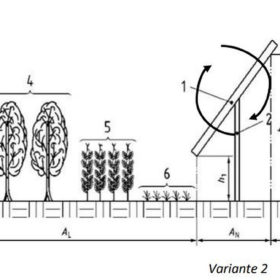
Italian solar sector defines standards for agrivoltaics
A document compiled by three Italian renewables associations identifies with extreme precision the area that is allowed to be used for power generation in the two most common agrivoltaics configurations — solar arrays with elevated solar modules and PV systems deployed between crop rows.
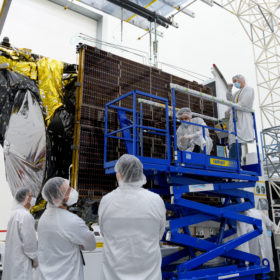
The Solar Tech Check: PV in space, and thin films stride forward
This week has seen NASA announce the completion of a new folding array set to power a mission deep into our solar system, while scientists continue to work on new applications to take such explorations even further from the sun. New measurements also promise routes to higher efficiency in cadmium-telluride PV, and details emerge of one of thinnest solar cells seen so far.
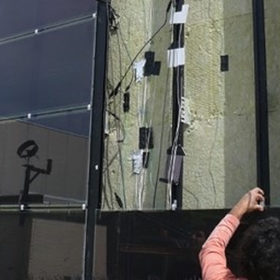
Photovoltaic forced ventilated facade for applications with air source heat pumps
Scientists in Spain have designed a BIPV forced ventilated facade that can be used as support for heating and a domestic hot water (DHW) building system based on air source heat pumps (ASHPs). In the proposed system configuration, the heat pump is expected to cover building heating demand at all times, regardless of the performance of the solar array.

Solar caravan powering the electric vehicle that tows it
The solar modules for the solar array were supplied by Chinese manufacturer Longi, which is a major partner in the project.
