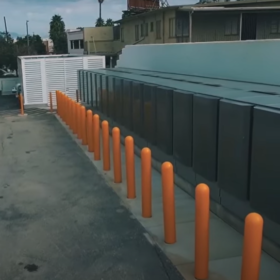
India’s first green hydrogen microgrid
NTPC Limited has selected California-headquartered Bloom Energy’s electrolyzer and hydrogen-powered fuel cell technologies for the nation’s first green hydrogen-based microgrid, which will be powered by a floating solar array.
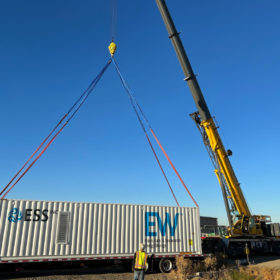
Iron flow battery PV microgrid for fire-prone California
ESS announced the integration of its long-duration batteries for a microgrid project commissioned by San Diego Gas & Electric to mitigate and increase resilience to wildfires.
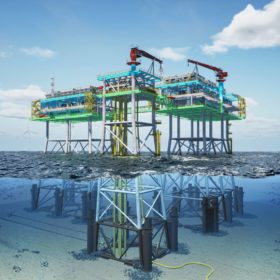
The Hydrogen Stream: Storing hydrogen in offshore caverns
Engie unit Tractebel is developing the technology. Elsewhere, the European Commission has approved, under state aid rules, a €900 million German scheme to support investment in green hydrogen production for EU consumption and Spanish company H2B2 Electrolysis Technologies is developing a project to generate up to 1,000kg per day of electrolytic hydrogen in California.
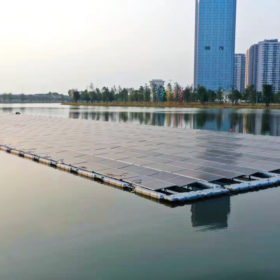
Floating solar array powering recreational park in Vietnam
The 600 kW array was built by Sungrow with 540 W solar panels and its own floating structures.
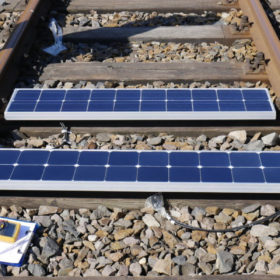
Solar for railways
Germany’s TÜV Rheinland is investigating how photovoltaics could be used for powering railway traction networks in a 14-month research project.
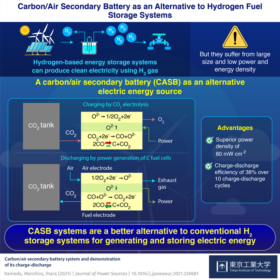
Carbon-air batteries vs hydrogen storage
Researchers from Tokyo Tech have developed an alternative to hydrogen energy storage which is smaller in size and more efficient. The system utilizes carbon as an energy source and demonstrates superior power density and charge-discharge efficiency of 38% over 10 cycles.
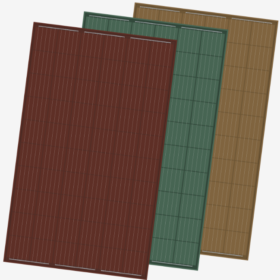
Colored BIPV panel with 350 W output from Italy
Italian manufacturer Solarday has launched a glass-glass building-integrated monocrystalline PERC panel available in red, green, gold and grey color. Its power conversion efficiency is 17.98% and its temperature coefficient is -0.39% per degree Celsius.
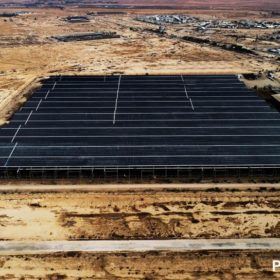
Israel allocates 1.14 GW of PV across two tenders, lowest price comes in at $0.02751/kWh
The Israeli authorities allocated more than 1.14 GW of PV capacity and 210 MWh of storage across two different tenders. In a first procurement exercise for the 330 MW/210 MWh Dimona solar-plus-storage project the winner was Israeli company Shikun & Binui Holdings Ltd. In another tender for innovative PV projects local developer Prime Energy secured 475 MW with the final average price of $0.0541/kWh.
Australian flow battery company completes ‘milestone’ installation
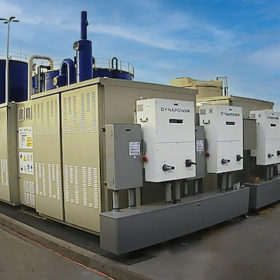
Brisbane-based flow battery company Redflow has completed its single biggest installation to date, a 2 MWh storage system in California for biowaste technology firm Anaergia.
Paired with ‘wonder material,’ over 21% efficiency demonstrated in perovskite solar cells
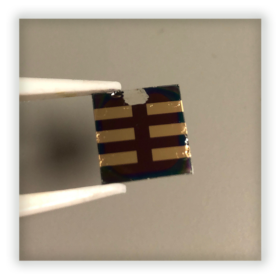
The use of phosphorene nanoribbons boosted the cell, putting it on par with traditional silicon cell output levels.
