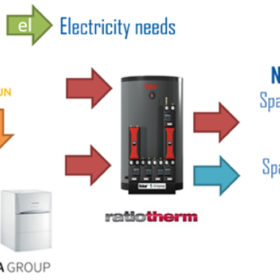
European consortium develops ways to couple heat pumps with solar panels
The Sun Horizon consortium has started to collect performance data on two pilot projects that combine heat pumps with solar systems using hybrid panels on homes in Riga, Latvia. The solution features a heat pump for space heating and domestic hot water and PVT panels to produce power for heating and domestic appliances, with excess power fed to the grid.
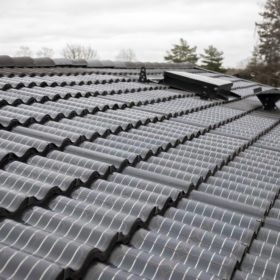
Rusnano tests made-in-Russia CIGS solar tiles
The 15%-efficient solar tile is manufactured by Russian producer Solartek with CIGS equipment provided by Sweden’s Midsummer.
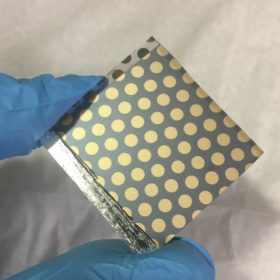
Rear-side passivation for 17.4% efficient CdTe thin film
Scientists in the United States investigated adding a layer of copper-aluminum oxide to the rear side of a cadmium-telluride thin film cell, finding positive impacts on carrier lifetime and efficiency. With further work, the scientists say, the discovery could open up new routes to higher efficiencies in CdTe solar cells.
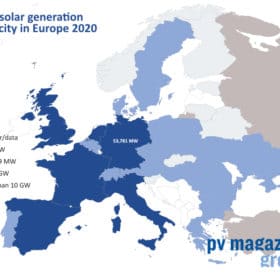
The state of EU renewables – Solar cell plans encouraging but heat pump market could go the same way as European PV did
The European Commission has published its second annual assessment of the competitiveness of the EU’s renewable energy technology industries, and it had a warning for policymakers about the trade balance trend being experienced by heat pump makers.
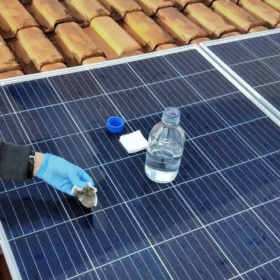
Solar panels host microbes that may be used for biotech applications
Scientists in Brazil have found that photovoltaic modules may be a repository of specialized microbes in tropical regions. According to them, these micro-organisms may be used in sunscreens, pigments for processed foods, chemicals, textiles, pharmaceuticals, and cosmetics.
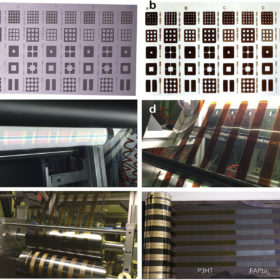
Flexible perovskite solar cells ‘from lab to fab’
Scientists in Korea evaluated recent progress in the development of low cost, large scale processes for the production of perovskite solar cells on flexible substrates, finding that several challenges remain. The group recommends that research should focus on developing novel processes and materials for perovskite solar cell production, rather than adapting those already in use elsewhere.
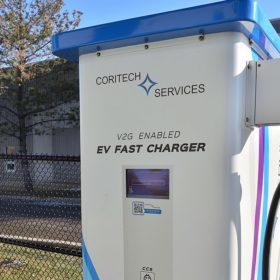
Imagine a nationwide energy system relying solely on distributed PV and V2G-equipped electric vehicles
Norwegian researchers have sought to assess the theoretical technical feasibility of a country-level energy system based exclusively on distributed solar, electric vehicles, and vehicle-to-grid technologies. They applied the model to sunny Spain and found that 3.45 billion m2 of PV systems would be necessary to build a 100% self-reliant energy system.
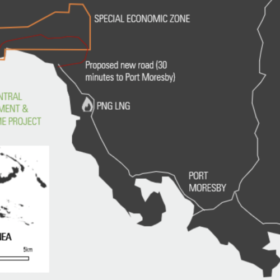
Gelion to deliver 100 MWh of zinc-bromide battery storage for Papua New Guinea project
Gelion, an Australian zinc-bromide battery tech specialist, has agreed to deliver 100 MWh of energy storage to Mayur Renewables for clean energy projects in Papua New Guinea under a new deal.

Energy efficiency a good substitute for long-term storage, says NREL
A 60% reduction in building energy use will be key to achieving a low-cost, 100% renewable energy grid, according to a new study by the U.S. National Renewable Energy Laboratory.
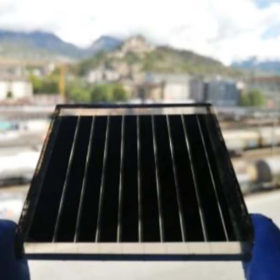
Isomer passivation for a 21.4% efficient perovskite module
An international team of scientists trialled a new approach to passivating defects in perovskite solar cells. Using a tailored arrangement of atoms, the team was able to overcome challenges related to the formation of a two-dimensional perovskite layer on top of the active cell material, and reach 21.4% conversion efficiency for a 26cm² active area, which they claim as a record for a perovskite device of this size.
