
Hydrogen-powered vehicles to enter Australian market
Startup H2X is banking on bringing automotive manufacturing back to Australia with hydrogen. After it unveiled its Warrego pickup truck last week, pv magazine Australia caught up with the company’s corporate affairs specialist, Tony Blackie.
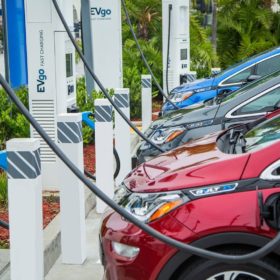
How safe are smart EV chargers?
Research has uncovered critical security threats associated with a number of common smart electric-vehicle chargers, but it’s not too late or too logistically difficult to remedy the issues.

All-perovskite tandem solar cell with 24.9% efficiency via cross-linkable small molecules
Scientists in China found that a change to the hole transport layer material helped to reduce voltage loss in a perovskite solar cell. The discovery demonstrates a promising new pathway to overcoming a major challenge for perovskites – particularly those used as the top layer in a tandem device.

Solar facade with frameless design
The frameless design of the 50 kW facade was made possible by a concealed suspension technology that, according to its creators, eliminates the need for additional edging at the edge of the module. The installation was built with 135 W CIGS solar modules.
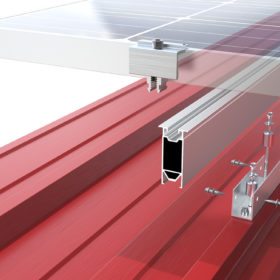
New mounting system for rooftop PV, from Austria
The mounting structure relies on a 5.8m long support rail that does not lie on the roof but is connected directly to a purlin placed below with self-drilling support screws.

Solar-powered airplane to reach the stratosphere
The airplane is powered by 22 square meters of solar cells with an efficiency of up to 24% and 14 kWh of lithium-ion batteries. According to its creators, it can reach an altitude of 25,000m.
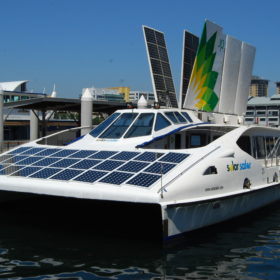
What seawater and salt spray can do to a PV system
Researchers in China have analyzed how the marine environment influences the performance of PV modules deployed on ships, and have found that salt particles can be detrimental to their performance as these act as both heating agents and a factor reducing solar irradiance. The temporary cooling effect provided by seawater is not sufficient to offset the impacts of salt spray and ensure increased power yields.
India may host massive amounts of PV module waste by 2030
India’s solar capacity growth up to 2030 also means the accumulation of a significant amount of PV module waste due to early failures or damage during transportation, installation, and operation. The waste generation could be 21 kilotons, assuming India’s cumulative installed PV capacity grows to 287.4 GW by 2030, from 40 GW in 2020. This doesn’t include end-of-life panel waste, as PV systems installed in the 2020-30 period are assumed to have at least 30 years of lifetime.
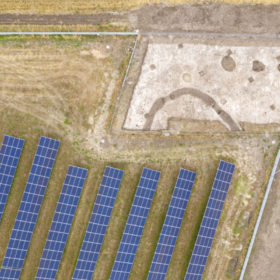
Solar projects can protect archaeological treasures
The shallow pilings used on solar farms can offer relief to subsoil structures which might otherwise be threatened by regular plowing and, as Italy’s biggest solar project has demonstrated, site surveying for PV projects can unearth hidden delights.

The Hydrogen Stream: Hyundai wants to halve fuel cell system costs in two years
Elsewhere, Uniper and the Port of Rotterdam have signed a deal to produce green hydrogen at the former’s site on the Maasvlakte extension of the port, and the Japanese government is helping Azerbaijan develop a green hydrogen and ammonia market.
