
Gravity-based energy storage tower developer notches a customer order
From pv magazine USA The gravity-based energy storage tower developed by Energy Vault has reached commercialization, with the company signing an agreement with DG Fuels to supply 1.6 GWh of energy storage. The tower will be charged with solar photovoltaic energy. The dispatched storage will support the creation of renewable hydrogen, biogenic based, synthetic aviation […]
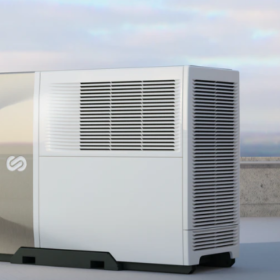
Hydrogen power generator for isolated areas, construction sites, events
Developed by French start-up EODev, the 100 kVa system is equipped with fuel cells manufactured by Toyota. The generator has a power of 110 kVA and its lifetime is guaranteed for 15,000 hours.
New flow battery from the United States
Developed by Honeywell, the flow battery is currently being tested by U.S. utility Duke Energy. The battery can reach a storage capacity of 12 MWh and be used through a modular approach in large scale renewable energy projects.

Solaria announces initial favorable ruling in patent dispute with Canadian Solar
According to a statement released by the Californian manufacturer, the U.S. International Trade Commission (ITC) issued an initial determination finding that Canadian Solar may have violated two U.S. patents covering Solaria’s shingled photovoltaic panels.
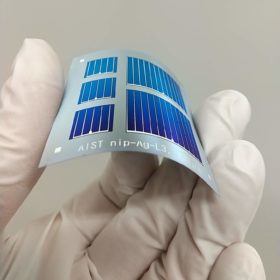
Japanese scientists build 23.27%-efficient heterojunction solar cell with 56.2μm-thick wafer
The 4cm2 cell showed a remarkable open-circuit voltage of 754 mV. It was fabricated with a hydrogenated nanocrystalline silicon (nc-Si:H) layer, which is said to show lower parasitic absorption and higher external quantum efficiency.
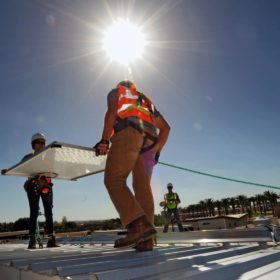
Large format modules present a new set of challenges
As modules change in size and form factor, ripple effects are felt across the entire solar industry, requiring tweaks, modifications, and outright changes to longstanding project development and construction practices.

Dragon scale solar tiles installed on Google buildings in Silicon Valley
Some 90,000 individual solar panels will generate enough electricity to cover around 40% of the electricity used in two buildings for Google.
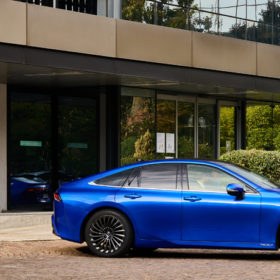
The Hydrogen Stream: Saudi Arabia bets on blue hydrogen, Denmark wants to improve green alkaline electrolysis
Elsewhere, Snam and Toyota are pushing for more hydrogen-based mobility in Italy, and Woodside Petroleum wants to establish an export-oriented hydrogen and ammonia production facility in Australia.
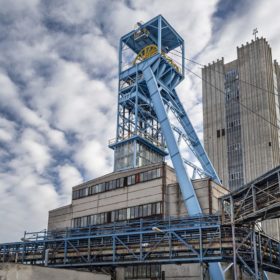
Converting coal mines into gravity-based renewable energy storage facilities
U.K.-based Gravitricity is planning to deploy its gravity-based energy storage solution at a decommissioned coal mine in Czechia. The project is part of a plan to commence a full-scale, 4-8 MW prototype scheme in disused mines next year.
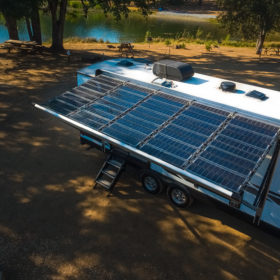
Retractable PV awning for recreational vehicles
The 1.2 kW solar awning can be retracted automatically in the event of adverse weather conditions. The patented technology, developed by Xponent Power, may enable a wide range of additional applications such as for use by the military, for emergency relief, and residential power.
