
Hanwha Q-Cells moves to enforce court ruling related to patent infringement
The Korean manufacturer today announced it wants to enforce a ruling made in the regional court of Düsseldorf in June which prohibited rival Jinko Solar from making, selling, importing and distributing products which the court ruled had infringed one of Hanwha’s passivation patents.
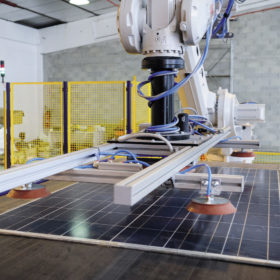
The weekend read: Circular innovations
Slowly but surely, environmental concerns are making their way into mainstream thought throughout the PV industry. A look at recycling offers an example of this, with stakeholders trying to get ahead of the high volumes of end-of-life modules already on the horizon. pv magazine examines the technologies that will be needed, alongside policy and economic support, to keep the bulk of these modules out of landfill and ultimately to establish a circular economy for PV materials.
The state of European energy
The proportion of clean energy consumed in the EU continues to rise but the European Commission’s State of the Energy Union report is critical of failings in energy efficiency, low-carbon-R&D spending, and the removal of fossil fuel subsidies.
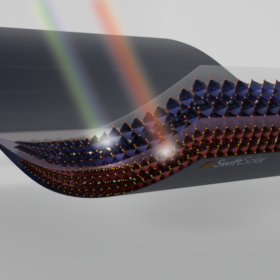
Swift Solar to push perovskite market forward
Born from an Oxford research group, the startup is looking to make its name by developing all-perovskite tandems – something no other company has done.
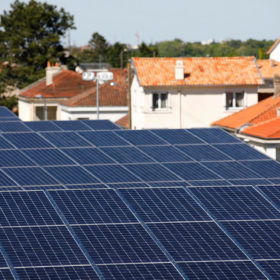
Total and Google Cloud develop tool to predict rooftop PV potential
The Solar Mapper uses artificial intelligence algorithms that compile data extracted from satellite images. It can estimate site solar potential and indicate the most suitable technology.
New algorithm to identify faults in PV systems
A new algorithm identifies five kinds of faults in PV systems, while also detecting when faults have been resolved to prevent false detections. It is based on the least significant difference test, which is a set of individual t-tests comparing the means of two or more pre-determined groups.
Climate change to reduce solar radiation in hot, arid regions
A new Princeton University study shows that PV plants in hot, arid parts of the world, such as the Middle East and the U.S. Southwest, will be particularly affected by climate change.

Scania develops solar cell-clad trailer
The 18-meter long solar cell-clad trailer is said to enable fuel savings of 5-10% in Sweden. Swedish thin-film manufacturer Midsummer is a partner on the project.

Unified methodology for PV data processing, quality verification
International researchers have developed data quality routines to ensure data fidelity in O&M practices. They reconstructed invalid data through a sequence of filtering stages and inference techniques.

Checkerboard solar cell design for improved light diffraction
A U.K.-Portuguese research group is proposing a new solar cell design based on diffraction gratings – optical components that split and diffract light into several beams. They claim this could lead to a 125% improvement in light trapping.
